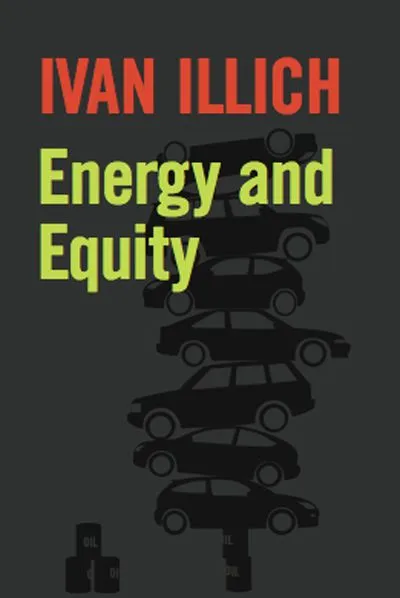
Energy and Equity
Report an issue
Tell us what's wrong and we'll take a look.
Thanks – we got it. We'll review and follow up if needed.
A junkie without access to his stash is in a state of crisis. The "energy crisis' that exists intermittently when the flow of fuel from unstable countries is cut off or threatened, is a crisis in the same sense. When such a crisis is perceived in the western sphere, there are normally two solutions proposed: Relieve our dependence on foreign fuels by developing "ecologically friendly' energy extraction technology, or send an army to pacify the fuel-rich region in question. Both of these paths, seemingly at odds with each other, take as fundamentally true a certain proposition, that in no circumstances should we use less energy than we already use. In this conception, all human problems must be solved by the impressment of still more "energy slaves' to meet the expanding demand of human masters. The two solutions consist of securing the current source of the drug, or finding a different, more secure pusher. In this essay, Illich examines the question of whether or not humans need any more energy than is their natural birthright. Along the way he gives a startling analysis of the marginal disutility of tools. After a certain point, that is, more energy gives negative returns. For example, moving around causes loss of time proportional to the amount of energy which is poured into the transport system, so that the speed of the fastest traveller correlates inversely to the equality as well as freedom of the median traveller.
Ivan Illich
Ivan Illich (1926 - 2002) became a parish priest in New York in 1951. He was appointed vice-rector of the Catholic University in Puerto Rico in 1956. In 1961 he founded CIDOC (Centro Intercultural de Documentación) at Cuernavaca in Mexico where he developed many of the ideas in his books. He is the author of Deschooling Society, Celebration of Awareness, Tools for Conviviality, The Right to Useful Unemployment, Energy and Equity, Shadow Work, Gender, H2O and the Waters of Forgetfulness, ABC: The Alphabetization of the Popular Mind, Disabling Professions, and In the Mirror of the Past.
More by Ivan Illich





Why Readwise Books?
Readwise Books is an ebook & audiobook platform that automatically logs how much you and your friends read, making it fun and easy to read more. Learn more →