Toward a History of Needs
Report an issue
Tell us what's wrong and we'll take a look.
Thanks – we got it. We'll review and follow up if needed.
In these pages, Ivan Illich writes against the moral authority of professions, against economic "development" as an unquestioned good, against schooling as the privileged path to learning, against the subjugation of desire to needs, and against ever greater energy use. At first glance, much of this can seem passé. The prestige of the professions has withered; development is no longerdebated but assumed; education has migrated to platforms and certificates; needs have given way to desires; energy expansion is the unquestioned fuel for data centers and planetary competition.It seems the world has moved on.
And yet Illich's critique has not dulled - it has sharpened.
The first quarter of the twenty-first century shows that Illich did not misread industrial society. His warning that life without access to commodities and services would become "impossible or criminal" now reads less like provocation than description. Economic development has intensified the compulsory dependence on cash in a world without enough paid jobs - whether in the United States or in Uganda. Desire is no longer suppressed by need, but is the explicit product of algorithmic persuasion, whose raw material is the envious fear of missing out. Professional authority has mutated into legal power. In many Western cities, sleeping in vehicles or building informal shelters invites fines or arrest. Without credentials one cannot cut hair, practice medicine, offer childcare, or drive. Access to work, to health, to money, and even to leisure presumes continuous digital connectivity. Commodity dependence no longer needs to be sold as progress. It is increasingly a legal requirement.
These essays expose the deep logic driving the mutilation of human capacities into managed dependencies. What has changed in fifty years is not the pertinence of the argument but the brutality of the system it describes.
With characteristic understatement, Illich also gestures toward an ungovernable possibility: engaging debilitating systems by playing with them, by dis-respecting them.
If you think Illich is passé, try living without your smart phone for a week.
Ivan Illich
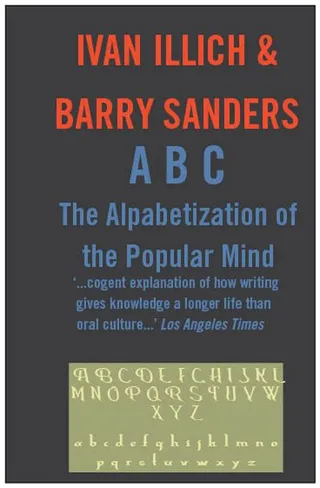
Ivan Illich (1926 - 2002) became a parish priest in New York in 1951. He was appointed vice-rector of the Catholic University in Puerto Rico in 1956. In 1961 he founded CIDOC (Centro Intercultural de Documentación) at Cuernavaca in Mexico where he developed many of the ideas in his books. He is the author of Deschooling Society, Celebration of Awareness, Tools for Conviviality, The Right to Useful Unemployment, Energy and Equity, Shadow Work, Gender, H2O and the Waters of Forgetfulness, ABC: The Alphabetization of the Popular Mind, Disabling Professions, and In the Mirror of the Past.
More by Ivan Illich




Why Readwise Books?
Readwise Books is an ebook & audiobook platform that automatically logs how much you and your friends read, making it fun and easy to read more. Learn more →