Report an issue
Tell us what's wrong and we'll take a look.
Thanks – we got it. We'll review and follow up if needed.
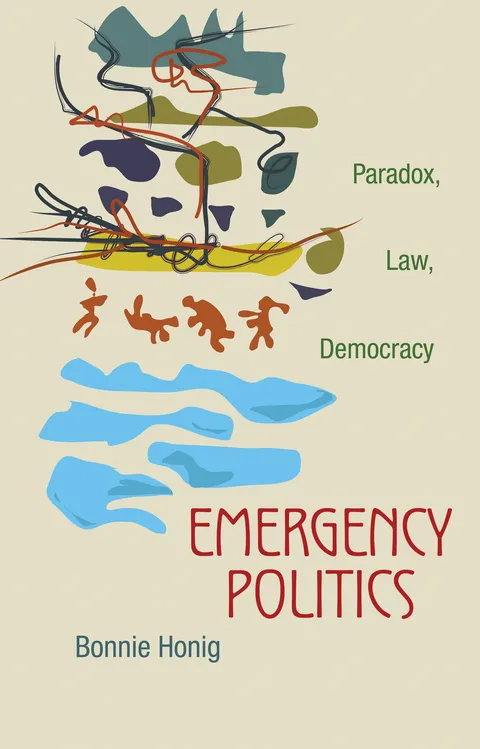
A more democratic response to political emergencies
This book intervenes in contemporary debates about the threat posed to democratic life by political emergencies. Must emergency necessarily enhance and centralize top-down forms of sovereignty? Those who oppose executive branch enhancement often turn instead to law, insisting on the sovereignty of the rule of law or demanding that law rather than force be used to resolve conflicts with enemies. But are these the only options? Or are there more democratic ways to respond to invocations of emergency politics? Looking at how emergencies in the past and present have shaped the development of democracy, Bonnie Honig argues that democracies must resist emergency's pull to focus on life's necessities (food, security, and bare essentials) because these tend to privatize and isolate citizens rather than bring us together on behalf of hopeful futures. Emphasizing the connections between mere life and more life, emergence and emergency, Honig argues that emergencies call us to attend anew to a neglected paradox of democratic politics: that we need good citizens with aspirational ideals to make good politics while we need good politics to infuse citizens with idealism.
Honig takes a broad approach to emergency, considering immigration politics, new rights claims, contemporary food politics and the infrastructure of consumption, and the limits of law during the Red Scare of the early twentieth century. Taking its bearings from Moses Mendelssohn, Franz Rosenzweig, and other Jewish thinkers, this is a major contribution to modern thought about the challenges and risks of democratic orientation and action in response to emergency.
Bonnie Honig
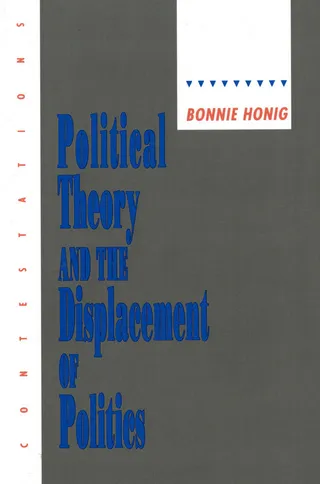
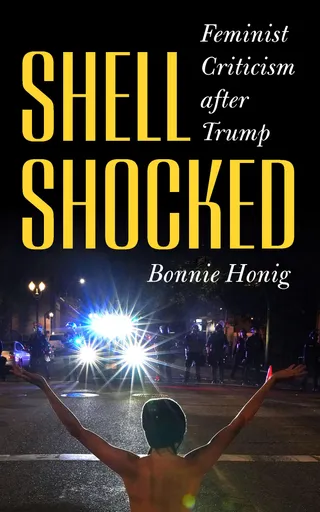
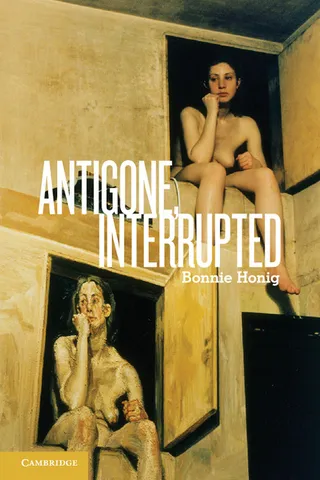
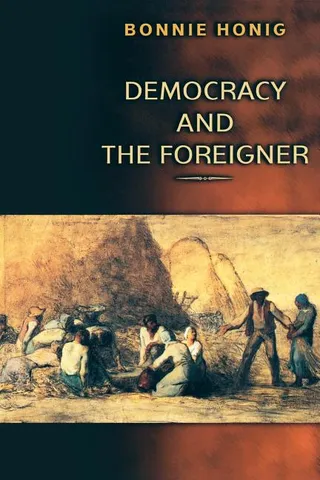
Bonnie Honig is Nancy Duke Lewis Professor of Modern Culture and Media (MCM) and Political Science at Brown University. In 2017–18, she served as inaugural Carl Cranor Phi Beta Kappa Scholar. An affiliate of the Digital Democracy Institute at Simon Fraser University and the American Bar Foundation, Chicago, her work in democratic and feminist theory studies the cultural politics of immigration (Democracy and the Foreigner, Princeton University Press, 2001), emergency (Emergency Politics: Paradox, Law, Democracy, Princeton University Press, 2009), mourning (Antigone, Interrupted, Cambridge University Press, 2013) and refusal (A Feminist Theory of Refusal, Harvard University Press, 2021). Her book Public Things: Democracy in Disrepair (Fordham University Press, 2017) came out days after Trump’s 2017 inauguration, and her first piece of public writing about that presidency, “The President’s House Is Empty,” appeared on that inauguration day in the Boston Review. A collection of her public writing, Shell Shocked: Feminist Criticism after Trump, appeared with Fordham University Press in 2021. In 2023, her first book, Political Theory and the Displacement of Politics, was republished as a thirtieth-anniversary edition by Cornell University Press.
More by Bonnie Honig



Why Readwise Books?
Readwise Books is an ebook & audiobook platform that automatically logs how much you and your friends read, making it fun and easy to read more. Learn more →