Democracy and the Foreigner
Report an issue
Tell us what's wrong and we'll take a look.
Thanks – we got it. We'll review and follow up if needed.
What should we do about foreigners? Should we try to make them more like us or keep them at bay to protect our democracy, our culture, our well-being? This dilemma underlies age-old debates about immigration, citizenship, and national identity that are strikingly relevant today. In Democracy and the Foreigner, Bonnie Honig reverses the question: What problems might foreigners solve for us? Hers is not a conventional approach. Instead of lauding the achievements of individual foreigners, she probes a much larger issue--the symbolic politics of foreignness. In doing so she shows not only how our debates over foreignness help shore up our national or democratic identities, but how anxieties endemic to liberal democracy themselves animate ambivalence toward foreignness.
Central to Honig's arguments are stories featuring ''foreign-founders,'' in which the origins or revitalization of a people depend upon a foreigner's energy, virtue, insight, or law. From such popular movies as The Wizard of Oz, Shane, and Strictly Ballroom to the biblical stories of Moses and Ruth to the myth of an immigrant America, from Rousseau to Freud, foreignness is represented not just as a threat but as a supplement for communities periodically requiring renewal. Why? Why do people tell stories in which their societies are dependent on strangers?
One of Honig's most surprising conclusions is that an appreciation of the role of foreigners in (re)founding peoples works neither solely as a cosmopolitan nor a nationalist resource. For example, in America, nationalists see one archetypal foreign-founder--the naturalized immigrant--as reconfirming the allure of deeply held American values, whereas to cosmopolitans this immigrant represents the deeply transnational character of American democracy. Scholars and students of political theory, and all those concerned with the dilemmas democracy faces in accommodating difference, will find this book rich with valuable and stimulating insights.
Bonnie Honig
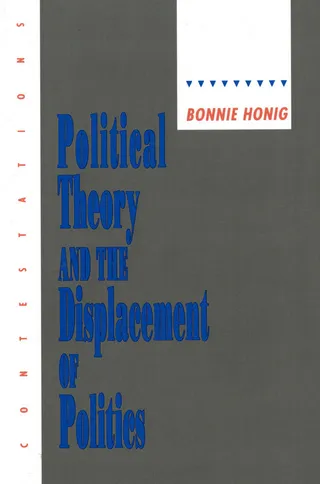
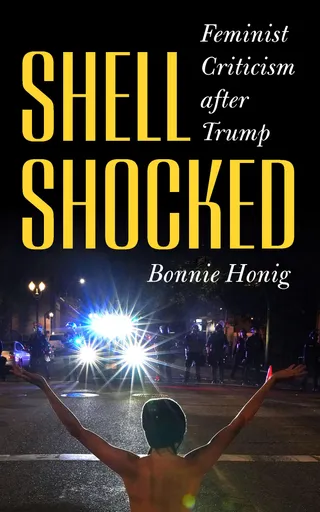
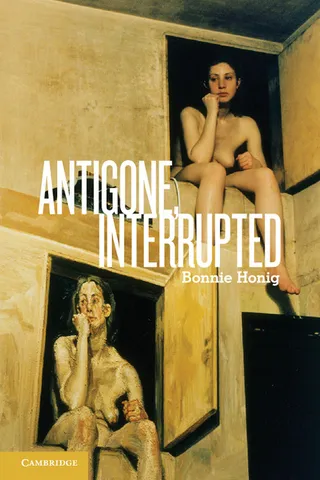
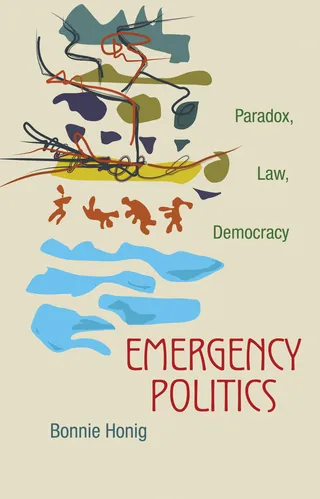
Bonnie Honig is Nancy Duke Lewis Professor of Modern Culture and Media (MCM) and Political Science at Brown University. In 2017–18, she served as inaugural Carl Cranor Phi Beta Kappa Scholar. An affiliate of the Digital Democracy Institute at Simon Fraser University and the American Bar Foundation, Chicago, her work in democratic and feminist theory studies the cultural politics of immigration (Democracy and the Foreigner, Princeton University Press, 2001), emergency (Emergency Politics: Paradox, Law, Democracy, Princeton University Press, 2009), mourning (Antigone, Interrupted, Cambridge University Press, 2013) and refusal (A Feminist Theory of Refusal, Harvard University Press, 2021). Her book Public Things: Democracy in Disrepair (Fordham University Press, 2017) came out days after Trump’s 2017 inauguration, and her first piece of public writing about that presidency, “The President’s House Is Empty,” appeared on that inauguration day in the Boston Review. A collection of her public writing, Shell Shocked: Feminist Criticism after Trump, appeared with Fordham University Press in 2021. In 2023, her first book, Political Theory and the Displacement of Politics, was republished as a thirtieth-anniversary edition by Cornell University Press.
More by Bonnie Honig




Why Readwise Books?
Readwise Books is an ebook & audiobook platform that automatically logs how much you and your friends read, making it fun and easy to read more. Learn more →