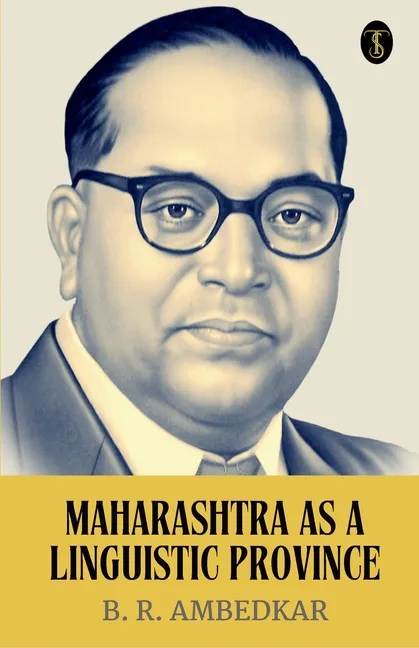
Maharashtra As A Linguistic Province
Report an issue
Tell us what's wrong and we'll take a look.
Thanks – we got it. We'll review and follow up if needed.
Maharashtra, a linguistic province, holds significance beyond its geographical boundaries. B. R. Ambedkar, a visionary and the architect of the Indian Constitution, acknowledged the pivotal role of language in shaping the identity and aspirations of its people. Ambedkar emphasized the empowerment that linguistic unity brings, advocating for the recognition and preservation of Marathi as the primary language of Maharashtra. He believed that linguistic cohesion fosters cultural pride and solidarity among diverse communities, laying the foundation for social progress and harmony. Ambedkar's vision for Maharashtra as a linguistic province encompassed not only the promotion of Marathi but also the protection of linguistic rights for all its residents. In his advocacy, he envisioned Maharashtra as a beacon of linguistic diversity and inclusivity, where every individual finds resonance and affirmation in their linguistic heritage.
B.R. Ambedkar
Bhimrao Ramji Ambedkar was born in 1891 into an "Untouchable" family of modest means. One of India's most radical thinkers, he transformed the social and political landscape in the struggle against British colonialism. He was a prolific writer who oversaw the drafting of the Indian Constitution and served as India's first Law Minister. In 1935, he publicly declared that though he was born a Hindu, he would not die as one. Ambedkar eventually embraced Buddhism, a few months before his death in 1956.
More by B.R. Ambedkar


Why Readwise Books?
Readwise Books is an ebook & audiobook platform that automatically logs how much you and your friends read, making it fun and easy to read more. Learn more →