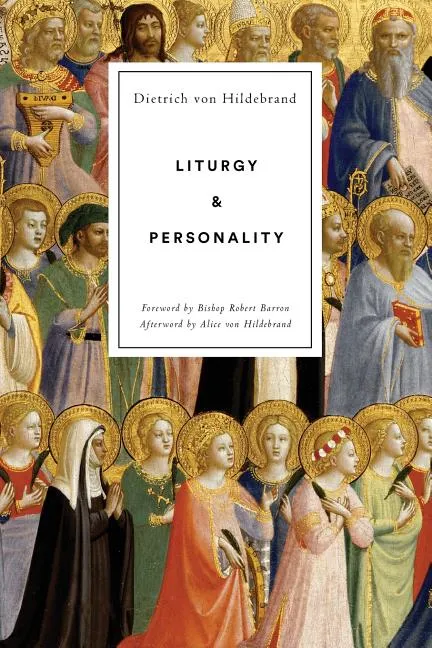
Liturgy and Personality
Report an issue
Tell us what's wrong and we'll take a look.
Thanks – we got it. We'll review and follow up if needed.
This book shatters the myth that formal prayer has to be dull and oppressive. It shows how the Liturgy actually improves those who take part in it, and it explains the numerous ways in which formal prayer is actually better than spontaneous prayer.
Dietrich Von Hildebrand
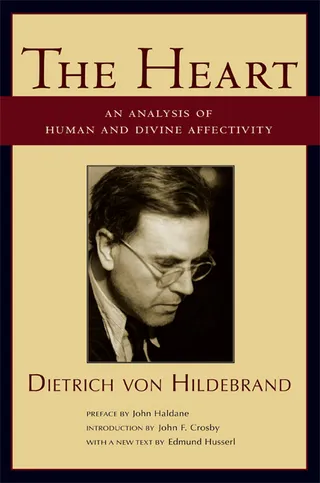
Dietrich von Hildebrand (1889-1977), born in Florence, was the son of renowned German sculptor Adolf von Hildebrand. A leading student of the philosophers Edmund Husserl and Max Scheler, he took up the "great questions"-about truth, freedom, conscience, community, love, beauty-with a freshness that allowed him to break new ground, especially in ethics, but also in epistemology, social philosophy, and aesthetics. His conversion to Catholicism in 1914 was the decisive turning point of his life and the impetus for important religious works. His opposition to Hitler and Nazism was so outspoken that he was forced to flee Germany in 1933, and later across Europe, finally settling in New York City in 1940, where he taught at Fordham University until 1960. He was the author of dozens of books, in both German and English. He was a major forerunner of Vatican II through his seminal writings on marriage, on Christian philosophy, and on the evil of anti-Semitism.
More by Dietrich Von Hildebrand


Why Readwise Books?
Readwise Books is an ebook & audiobook platform that automatically logs how much you and your friends read, making it fun and easy to read more. Learn more →