Report an issue
Tell us what's wrong and we'll take a look.
Thanks – we got it. We'll review and follow up if needed.
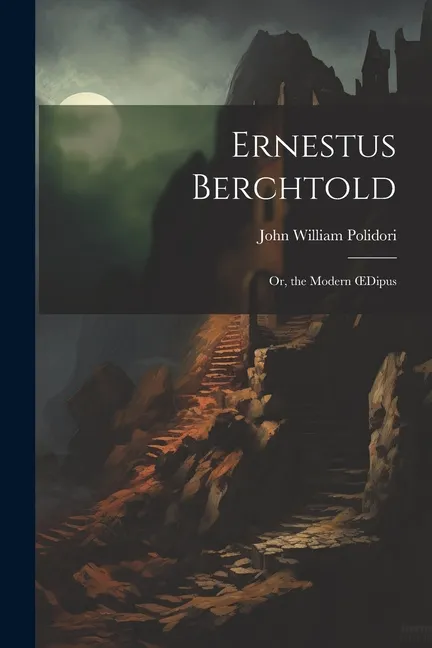
Enter the dark world of Ernestus Berchtold, the tragic hero of this gripping Gothic tale by the acclaimed author of 'The Vampyre'. With themes of fate, destiny, and the supernatural, this haunting novel displays Polidori's talent for crafting unforgettable characters and exploring the dark corners of the human psyche.
This work has been selected by scholars as being culturally important, and is part of the knowledge base of civilization as we know it.
This work is in the "public domain in the United States of America, and possibly other nations. Within the United States, you may freely copy and distribute this work, as no entity (individual or corporate) has a copyright on the body of the work.
Scholars believe, and we concur, that this work is important enough to be preserved, reproduced, and made generally available to the public. We appreciate your support of the preservation process, and thank you for being an important part of keeping this knowledge alive and relevant.
John William Polidori
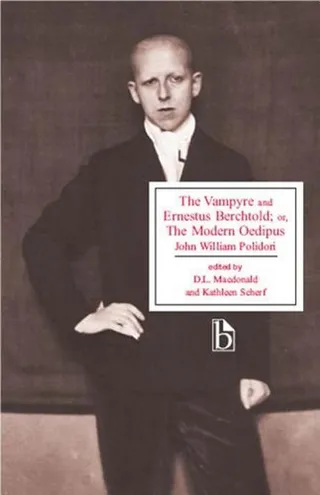
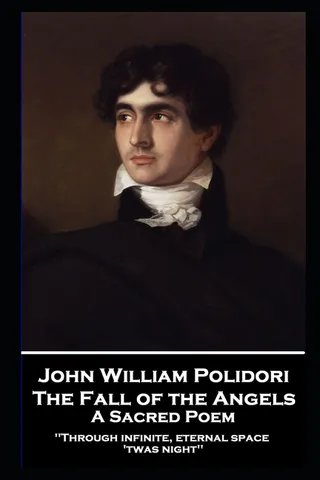
John William Polidori (1795-1821) was a British physician and writer born in London. His father, Gaetano Polidori, was an Italian scholar and translator. John studied medicine at the University of Edinburgh and received his degree in 1815. The following year he accompanied Lord Byron to the Continent as his physician. He was still a young man when he joined the party near Lake Geneva whose literary exercises later became part of the history of Gothic fiction.In 1816, Byron, Polidori, Percy Bysshe Shelley, Mary Godwin, and Claire Clairmont spent time in the same circle in Switzerland. A proposal to write ghost stories gave the group a reason to try their hands at supernatural fiction. Mary Godwin, later Mary Shelley, developed the work that became Frankenstein. Byron wrote a fragment. Polidori drew on a premise of Byron's in developing The Vampyre, giving his predator an aristocratic bearing and a ready place among fashionable acquaintances.The Vampyre appeared in the New Monthly Magazine in April 1819 with Byron's name attached to it in error. Byron denied writing it, and Polidori asserted his authorship. The confusion is part of the tale's early history. The contrast between a recognizable social type and the danger that attends him is part of the reason the story can be read on its own terms today. Lord Ruthven has a kind of mobility that later writers would find useful. He can move between places and people with the advantages of rank, without having to begin by convincing anyone that he belongs there.Polidori also wrote Ernestus Berchtold; or, The Modern Oedipus, a novel published in 1819, and kept a diary during his time with Byron. His nephew William Michael Rossetti edited the diary for publication in the early twentieth century, giving later readers a fuller account of Polidori's travels and his place in the literary company of 1816. Polidori died in 1821 at twenty-five. The Vampyre remains the clearest example of what he was able to do with the supernatural tale. By giving Ruthven social standing and a reputation to protect him, he made everyday habits of trust part of what a reader has to fear.
More by John William Polidori






Why Readwise Books?
Readwise Books is an ebook & audiobook platform that automatically logs how much you and your friends read, making it fun and easy to read more. Learn more →