The Federalist Papers
Report an issue
Tell us what's wrong and we'll take a look.
Thanks – we got it. We'll review and follow up if needed.
In September 1787, after a long summer of intense deliberation and compromise, the Federal Convention released a proposed Constitution of the United States--and immediately ignited a firestorm. Public debate was passionate and fierce. Supporters, the Federalists, believed the Constitution would save the floundering former colonies from the confusion and anarchy of the current, weak government. Detractors held that adopting the Constitution would mean nothing less than the end of American liberty.
The Federalists--among them George Washington and Benjamin Franklin--knew that the stakes could not be higher: the ideals of the Declaration of Independence, and America's very existence as an independent nation, depended on the protection of the Constitution. And so on Saturday, October 27, 1787, Alexander Hamilton came to its defense, publishing the first column of what would come to be known as The Federalist Papers.
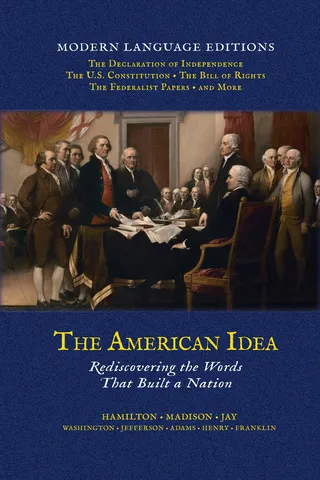
Written by Hamilton, James Madison, and John Jay from October 1787 to August 1788--a span of 294 days that ranks among the most consequential periods in politics--The Federalist Papers are part history, part political science, and part theology. Introduced here by bestselling American historian and biographer Jon Meacham, they offer unparalleled insight into the workings of the democratic process and the values underpinning the American project--then as now.
Alexander Hamilton
Alexander Hamilton (1757–1804), now immortalized in the eponymous Broadway musical, was an American Founding Father and an influential interpreter and promoter of the US Constitution. As the original US Treasury Secretary, he was the main author of George Washington's economic policies, founding the nation's financial system. Mobilizing a nationwide network of friends of the government, especially bankers and businessmen, he went on to establish the Federalist Party, the US Coast Guard, and The New York Post. Hamilton was active in ending the international slave trade and died after a duel with the US Vice President Aaron Burr.
More by Alexander Hamilton


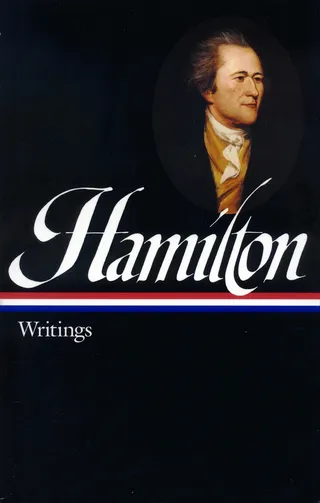

James Madison
James Madison (1751–1836) was the fourth US President and is hailed as the "Father of the Constitution" for his pivotal role in drafting and promoting the supreme law of the United States, including the Bill of Rights. As Thomas Jefferson's Secretary of State, he supervised the Louisiana Purchase, which doubled the nation's size. Madison succeeded Jefferson as President in 1809, was re-elected in 1813, and presided over renewed prosperity for several years.
More by James Madison






John Jay
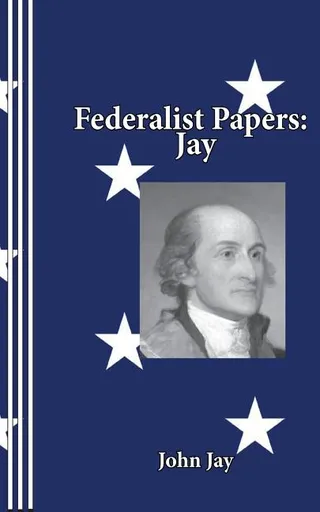
John Jay (1745–1829) was the first Chief Justice of the United States. During and after the American Revolution, he was the US ambassador to Spain, a negotiator of the Treaty of Paris by which Great Britain recognized American independence, and the Secretary of Foreign Affairs. His major diplomatic achievement was the 1794 Treaty of London, in which favorable trade terms with Great Britain were negotiated. As a leader of the Federalist Party, Jay became governor of New York state, where he was the leading opponent of slavery. By signing the 1799 "Act for the Gradual Abolition of Slavery" into law, he granted all slaves in New York freedom by the year 1827.
More by John Jay











Why Readwise Books?
Readwise Books is an ebook & audiobook platform that automatically logs how much you and your friends read, making it fun and easy to read more. Learn more →