
The U.S. Constitution
Anti-Federalist Edition
Report an issue
Tell us what's wrong and we'll take a look.
Thanks – we got it. We'll review and follow up if needed.
The Constitution of the United States is the supreme law of the United States of America, and worthy of study. In formation though, the path to adoption was not without dissent: the Anti-Federalist movement was against the creation of a stronger U.S. federal government, and vocally opposed the ratification of the Constitution, because the Articles of Confederation originally gave state governments more authority. Led by Patrick Henry of Virginia, Anti-Federalists worried, among other things, that the position of president might evolve into a monarchy. A selection of Anti-Federalist writings is presented with this edition of the the U.S. Constitution, so that their perspective might be examined in context.










Thomas Paine
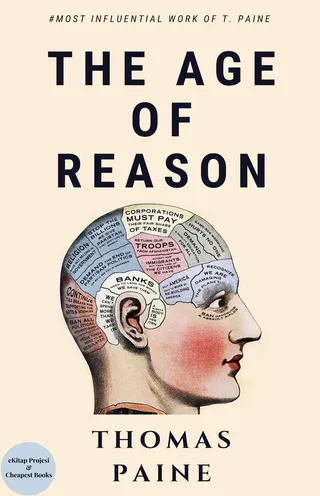
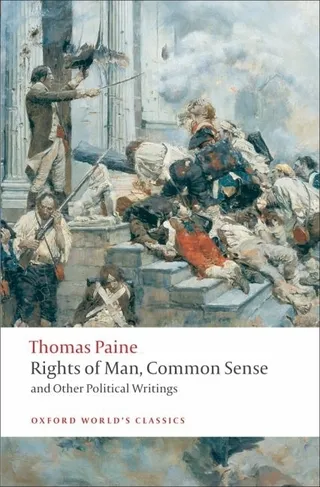
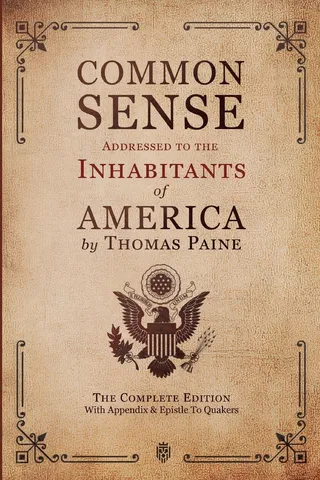
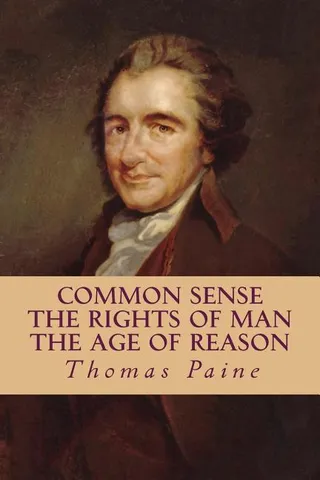
English-born Thomas Paine left behind hearth and home for adventures on the high seas at nineteen. Upon returning to shore, he became a tax officer, and it was this job that inspired him to write The Case of the Officers of Excise in 1772. Paine then immigrated to Philadelphia, and in 1776 he published Common Sense, a defense of American independence from England. After returning to Europe, Paine wrote his famous Rights of Man as a response to criticism of the French Revolution. He was subsequently labeled as an outlaw, leading him to flee to France where he joined the National Convention. However, in 1793 Paine was imprisoned, and during this time he wrote the first part of The Age of Reason, an anti-church text which would go on to be his most famous work. After his release, Paine returned to America where he passed away in 1809.
More by Thomas Paine





John Adams
Permaculture magazine has been in print since 1992, during which time John Adams has been writing articles about his various DIY projects. This is a collection of his most popular projects plus a selection of our favorite readers' DIY submissions.
More by John Adams







Alexander Hamilton
A Scottish merchant and captain, Alexander Hamilton sailed for more than thirty years, from around 1688 to 1723, across the seas linking southern Africa to the coasts of India. Independent of the great companies, he traded on his own account from Zanzibar to Japan, closely observing the courts, ports, and wars of his time. His account, published in 1727 under the title A New Account of the East Indies, remains one of the few direct testimonies of a European merchant who lived, rather than imagined, the Indian Ocean of his era.
More by Alexander Hamilton








Why Readwise Books?
Readwise Books is an ebook & audiobook platform that automatically logs how much you and your friends read, making it fun and easy to read more. Learn more →