Report an issue
Tell us what's wrong and we'll take a look.
Thanks – we got it. We'll review and follow up if needed.
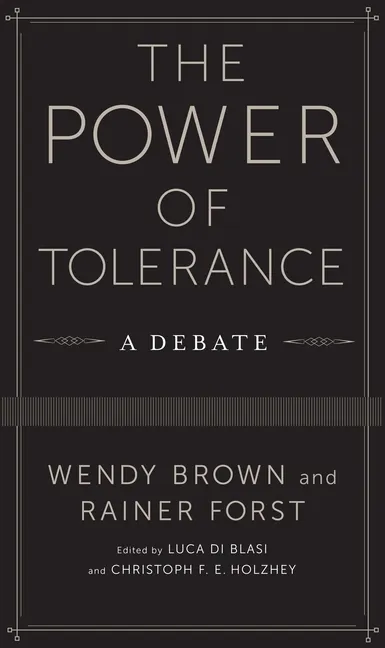
We invoke the ideal of tolerance in response to conflict, but what does it mean to answer conflict with a call for tolerance? Is tolerance a way of resolving conflicts or a means of sustaining them? Does it transform conflicts into productive tensions, or does it perpetuate underlying power relations? To what extent does tolerance hide its involvement with power and act as a form of depoliticization?
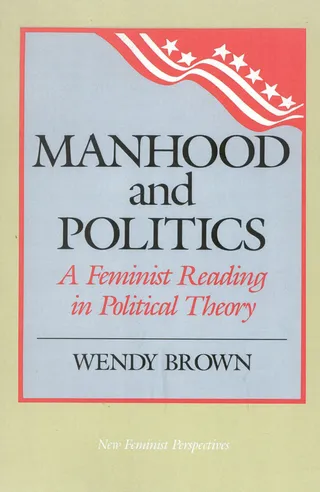
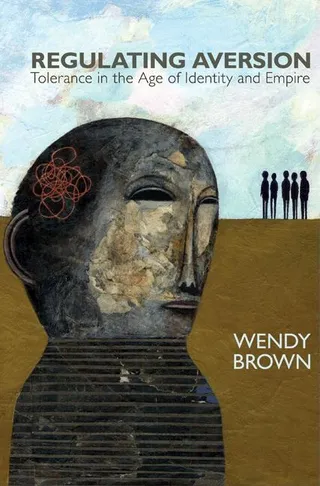
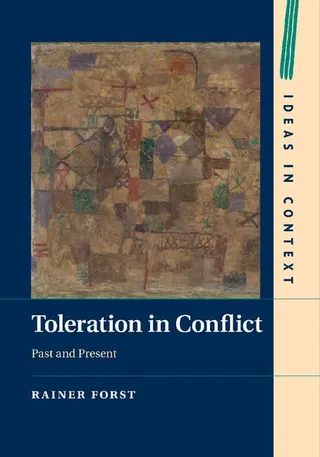
Wendy Brown and Rainer Forst debate the uses and misuses of tolerance, an exchange that highlights the fundamental differences in their critical practice despite a number of political similarities. Both scholars address the normative premises, limits, and political implications of various conceptions of tolerance. Brown offers a genealogical critique of contemporary discourses on tolerance in Western liberal societies, focusing on their inherent ties to colonialism and imperialism, and Forst reconstructs an intellectual history of tolerance that attempts to redeem its political virtue in democratic societies. Brown and Forst work from different perspectives and traditions, yet they each remain wary of the subjection and abnegation embodied in toleration discourses, among other issues. The result is a dialogue rich in critical and conceptual reflections on power, justice, discourse, rationality, and identity.
Wendy Brown
Wendy Brown (PhD, Political Philosophy, Princeton) is Class of 1936 First Professor of Political Science at the University of California at Berkeley. She is the author of Undoing the Demos: Neoliberalism's Stealth Revolution (Zone, 2015), Walled States, Waning Sovereignty (Zone, 2010), and Regulating Aversion: Tolerance in the Age of Empire and Identity (Princeton, 2006) and coauthor (with Rainer Forst) of The Power of Tolerance (Columbia, 2014), among a number of other titles. Her interests include political theory, critical theory, continental philosophy, psychoanalysis, democratic theory, capitalism, and neoliberalism.
More by Wendy Brown

Rainer Forst
Rainer Forst is Professor of Political Theory and Philosophy at the Johann Wolfgang Goethe University in Frankfurt, Germany. and the Chairman of the Excellenzkluster 'The Formation of Normative Orders'. He received his doctorate under the supervision of Jürgen Habermas in 1993. He is the author of four books, three of which have been translated into English: Contexts of Justice (2002) , The Right to Justification (2010) and Toleration in Conflict (forthcoming).
More by Rainer Forst


Why Readwise Books?
Readwise Books is an ebook & audiobook platform that automatically logs how much you and your friends read, making it fun and easy to read more. Learn more →