Report an issue
Tell us what's wrong and we'll take a look.
Thanks – we got it. We'll review and follow up if needed.
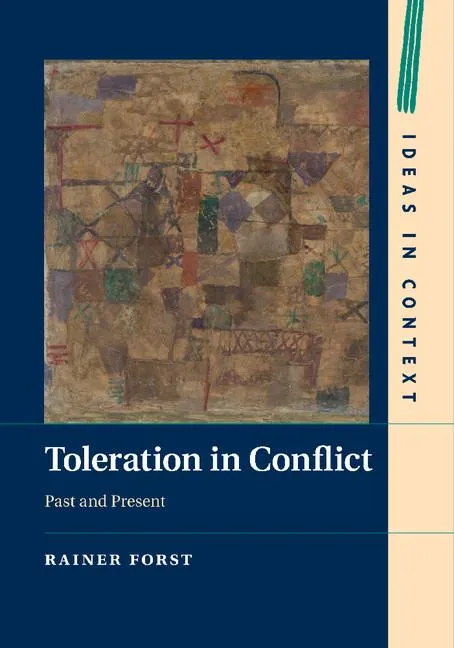
The concept of toleration plays a central role in pluralistic societies. It designates a stance which permits conflicts over beliefs and practices to persist while at the same time defusing them, because it is based on reasons for coexistence in conflict - that is, in continuing dissension. A critical examination of the concept makes clear, however, that its content and evaluation are profoundly contested matters and thus that the concept itself stands in conflict. For some, toleration was and is an expression of mutual respect in spite of far-reaching differences, for others, a condescending, potentially repressive attitude and practice. Rainer Forst analyses these conflicts by reconstructing the philosophical and political discourse of toleration since antiquity. He demonstrates the diversity of the justifications and practices of toleration from the Stoics and early Christians to the present day and develops a systematic theory which he tests in discussions of contemporary conflicts over toleration.
Rainer Forst
Rainer Forst is Professor of Political Theory and Philosophy at the Johann Wolfgang Goethe University in Frankfurt, Germany. and the Chairman of the Excellenzkluster 'The Formation of Normative Orders'. He received his doctorate under the supervision of Jürgen Habermas in 1993. He is the author of four books, three of which have been translated into English: Contexts of Justice (2002) , The Right to Justification (2010) and Toleration in Conflict (forthcoming).
More by Rainer Forst


Why Readwise Books?
Readwise Books is an ebook & audiobook platform that automatically logs how much you and your friends read, making it fun and easy to read more. Learn more →