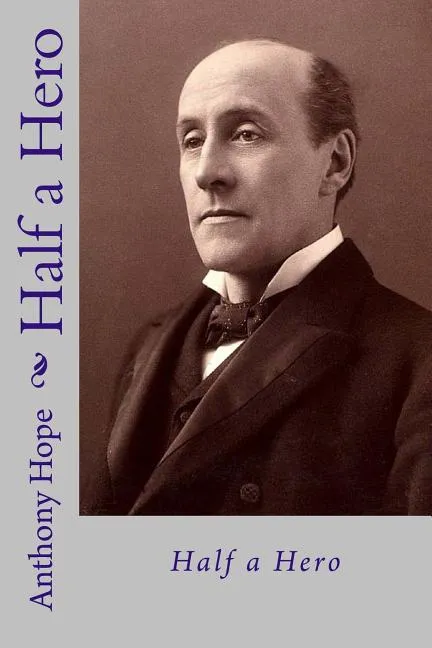
Half a hero
Report an issue
Tell us what's wrong and we'll take a look.
Thanks – we got it. We'll review and follow up if needed.
In the garden the question was settled without serious difference of opinion. If Sir Robert Perry really could not go on-and Lady Eynesford was by no means prepared to concede even that-then Mr. Puttock, bourgeois as he was, or Mr. Coxon, conceited and priggish though he might be, must come in. At any rate, the one indisputable fact was the impossibility of Mr. Medland: this was, to Lady Eynesford's mind, axiomatic, and, in the safe privacy of her family circle (for Miss Scaife counted as one of the family, and Captain Heseltine and Mr. Flemyng did not count at all), she went so far as to declare that, let the Governor do as he would (in the inconceivable case of his being so foolish as to do anything of the kind), she at least would not receive Mr. Medland. Having launched this hypothetical thunderbolt, she asked Alicia Derosne to give her another cup of tea. Alicia poured out the tea, handed it to her sister-in-law, and asked, "But, Mary, what is there so dreadful about Mr. Medland?"
Anthony Hope
Sir Anthony Hope Hawkins was born in 1863 and, after taking a degree at Oxford University, was called to the bar in 1887. He initially combined a successful career as a barrister with writing but the immediate success of his tenth book, The Prisoner of Zenda (1894), allowed him to become a full-time writer. The novel spawned a new genre – Ruritanian romance – and has been adapted numerous times for film, television and stage. In all, Hope wrote thirty-two works of fiction and an autobiography. At the close of the First World War he was knighted for his contribution to propaganda work. Hope died in 1933.
More by Anthony Hope





Why Readwise Books?
Readwise Books is an ebook & audiobook platform that automatically logs how much you and your friends read, making it fun and easy to read more. Learn more →