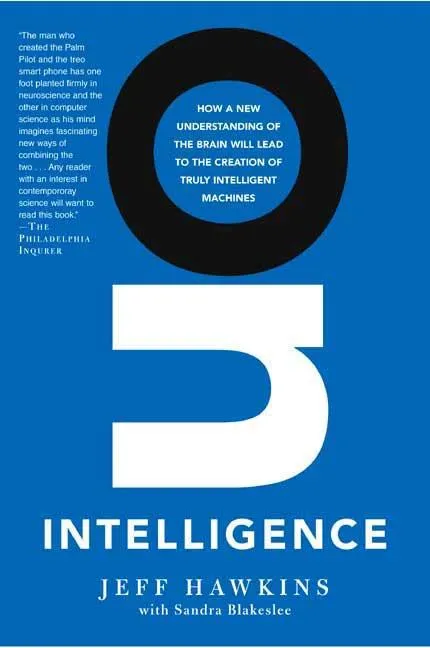
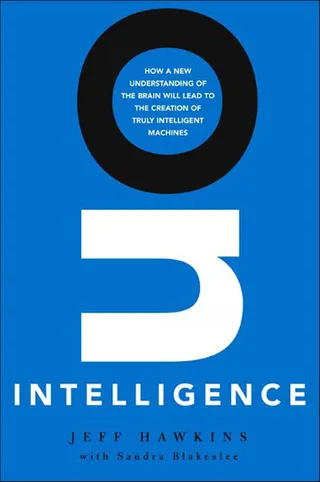
On Intelligence
How a New Understanding of the Brain Will Lead to the Creation of Truly Intelligent Machines
Report an issue
Tell us what's wrong and we'll take a look.
Thanks – we got it. We'll review and follow up if needed.
From the inventor of the PalmPilot and the bestselling author of A Thousand Brains comes a compelling theory of intelligence, brain function, and the future of intelligent machines.
Jeff Hawkins, the man who created the PalmPilot, Treo smart phone, and other handheld devices, has reshaped our relationship to computers. Now he stands ready to revolutionize both neuroscience and computing in one stroke, with a new understanding of intelligence itself.
Hawkins develops a powerful theory of how the human brain works, explaining why computers are not intelligent and how, based on this new theory, we can finally build intelligent machines.
The brain is not a computer, but a memory system that stores experiences in a way that reflects the true structure of the world, remembering sequences of events and their nested relationships and making predictions based on those memories. It is this memory-prediction system that forms the basis of intelligence, perception, creativity, and even consciousness.
In an engaging style that will captivate audiences from the merely curious to the professional scientist, Hawkins shows how a clear understanding of how the brain works will make it possible for us to build intelligent machines, in silicon, that will exceed our human ability in surprising ways.
Written with acclaimed science writer Sandra Blakeslee, On Intelligence promises to completely transfigure the possibilities of the technology age. It is a landmark book in its scope and clarity.
Hawkins
Anthony Hope was an English novelist, playwright, and short story writer, best known for his adventure and romance novels, particularly The Prisoner of Zenda (1894 Hope's early works, including The Prisoner of Zenda, were hugely popular and established him as a prominent writer of adventure fiction. His novel The Prisoner of Zenda became an iconic work of the adventure genre, featuring a story of political intrigue, mistaken identity, and daring escapades. The novel's success led to a series of sequels and adaptations, cementing Hope's reputation. While known for his adventure tales, Hope's later works, such as Double Harness explores the complexities of marriage, love, and societal expectations, marking a departure from his earlier, more action-driven stories. In addition to his fiction, Hope wrote plays and essays. Hope's ability to craft engaging narratives, often filled with intrigue and complex relationships, earned him a place among the well-known writers of his era.
More by Hawkins







Sandra Blakeslee
Sandra Blakeslee is a science correspondent at the New York Times who specializes in the brain sciences. She has witnessed firsthand the major developments and discoveries in neuroscience, both in the United States and abroad, for well over twenty years. She has cowritten many books, including the bestselling Second Chances with Judith Wallerstein. She is the third generation in a family of science writers.
More by Sandra Blakeslee




Why Readwise Books?
Readwise Books is an ebook & audiobook platform that automatically logs how much you and your friends read, making it fun and easy to read more. Learn more →