Report an issue
Tell us what's wrong and we'll take a look.
Thanks – we got it. We'll review and follow up if needed.
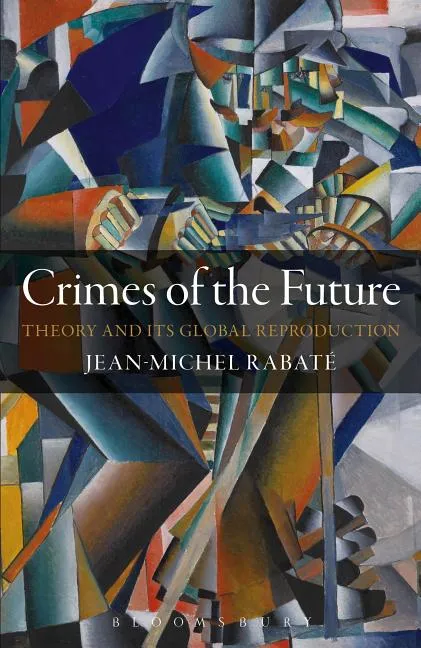
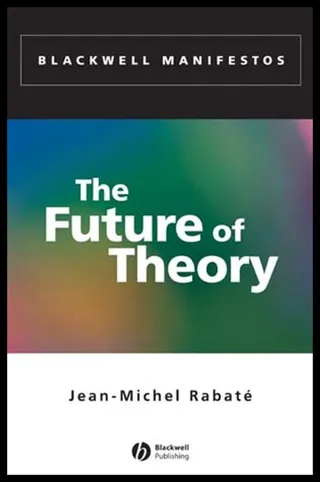
The decade since the publication of Jean-Michel Rabaté's controversial manifesto The Future of Theory saw important changes in the field. The demise of most of the visible French or German philosophers, who had produced texts that would trigger new debates, then to be processed by Theory, has led to drastic revisions and starker assessments.
Globalization has been the most obvious factor to modify the selection of texts studied. During the twentieth century, Theory incorporated poetics, rhetorics, aesthetics and linguistics, while also opening itself to continental philosophy. What has changed today? The knowledge that we live in a de-centered world has destabilized the primacy granted to a purely Western canon. Moreover, much of contemporary theory remains highly allusive and this is often baffling for students. Theory keeps recycling itself, producing authentic returns of basic theses, terms and concepts. Canonical modern theorists often return to classical texts, as those of Plato, Kant, Hegel, Nietzsche.
And now we want to know: what is new?
Crimes of the Future explores the past, present and potential future of Theory.
Jean-Michel Rabaté
Jean-Michel Rabaté is Professor of English and Comparative Literature at the University of Pennsylvania and a Fellow of the American Academy of Arts and Sciences. He has written or edited more than thirty-five books on modernism, psychoanalysis, and philosophy.
More by Jean-Michel Rabaté


Why Readwise Books?
Readwise Books is an ebook & audiobook platform that automatically logs how much you and your friends read, making it fun and easy to read more. Learn more →