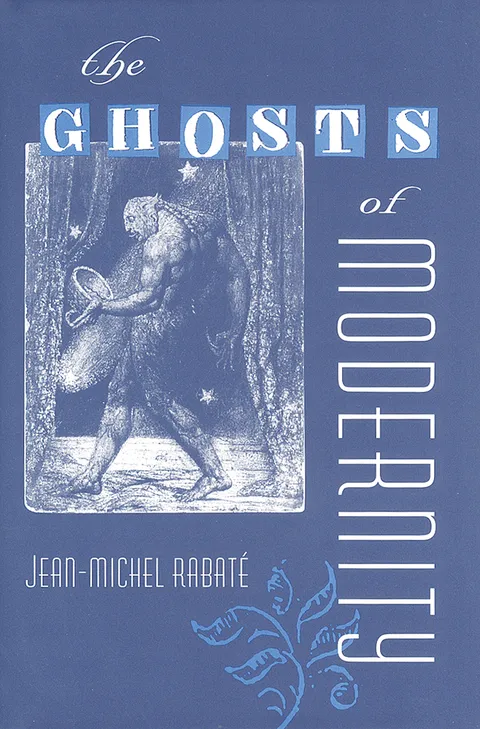
The Ghosts of Modernity
Report an issue
Tell us what's wrong and we'll take a look.
Thanks – we got it. We'll review and follow up if needed.
Jean-Michel Rabaté, the eminent French Joycean, combines psychoanalytical and philosophical concepts in rereading the history of modernity to give a more precise meaning to the term "modernism."
Rabaté focuses throughout on a single theme, the ghostly nature of modernity. In writing a history of the concept of modernity with the awareness that the radically new has often been subject to the effects of the return of the repressed, Rabaté analyzes the notion of loss in various fields: in Freudian aesthetics of color, in literary history, and in philosophy. The postmodernist fascination with a lost object allows a reconsideration of the boundaries of such terms as "modernism" and "postmodernism."
The conclusion ties together all these motifs, from Joyce to Barthes, together and shows their theoretical basis in Marx's criticism of ideology and in Freud's consideration of mourning. From the analysis of "color" as an unthinkable object of discourse to an aesthetics of the unpresentable, Rabaté points to the possibility of an "ethics of mourning," which would seem capable of overcoming the dead end of history whose ending condemns it to eternal repetition.
This work will appeal to a wide community of scholars. Its strong French and continental emphasis has application in literary studies, particularly English, French, and comparative studies.
Jean-Michel Rabaté
Jean-Michel Rabaté is Professor of English and Comparative Literature at the University of Pennsylvania and a Fellow of the American Academy of Arts and Sciences. He has written or edited more than thirty-five books on modernism, psychoanalysis, and philosophy.
More by Jean-Michel Rabaté


Why Readwise Books?
Readwise Books is an ebook & audiobook platform that automatically logs how much you and your friends read, making it fun and easy to read more. Learn more →