Report an issue
Tell us what's wrong and we'll take a look.
Thanks – we got it. We'll review and follow up if needed.
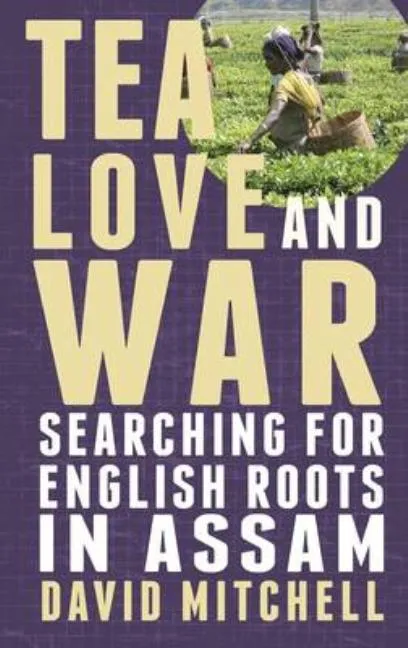
The range of the book: from wartime England to colonial Assam; from sapper training in India to jungle warfare in Malaya - Tea, Love and War tells the unique true story of the child of an exploited village woman gaining recognition and acceptance in suburban England. It is split into three parts: Stuart and Mary's story, David's story, and Ann's story. Stuart, working on a tea estate in the jungles of Assam, fathers a child by a teenage native woman. Stuart's letters to his family in pre-war England vividly describe his life as a planter in colonial India but conceal his secret love life. When war breaks out, Stuart joins the Indian army, trains as a sapper and is posted to Malaya, blowing bridges in the desperate rearguard action against the Japanese invasion. Back in wartime England, his sister Mary marries Stuart's best friend, Arthur, who decides to train as an army officer. Mary, now a young mother pregnant with her second child, tells of the year's delay in hearing news of her brother's death at the fall of Singapore. Before the child is born, she learns that Arthur has been killed in action in Italy. The story switches to a jungle village in Assam where a small Anglo-Indian child named Ann fights her way through poverty and discrimination, always seeking the identity of her father and his family. Tea, Love and War is a gripping true story, narrated by Mary through her son David. "Much of the text is taken from the many exercise books that she filled with her memories, and whilst my investigations have expanded and updated her story, the history of the relevant elements of the Second World War, the Blitz and public perception of the Malayan campaign leading to the fall of Singapore are more eloquently seen from her individual viewpoint." The book will appeal to fans of autobiographies, history and social history - Anglo-Indian culture and exploitation of women in India are key themes in the text - and has been inspired by Wild Swans.
David Mitchell
David Mitchell is the author of the novels Ghostwritten, number9dream, Cloud Atlas, Black Swan Green, The Thousand Autumns of Jacob de Zoet, The Bone Clocks, Slade House and Utopia Avenue. He has been shortlisted twice for the Booker Prize, won the World Fantasy Award, and the John Llewellyn Rhys, Geoffrey Faber Memorial and South Bank Show Literature Prizes, among others. In 2018, he won the Sunday Times Award for Literary Excellence, given in recognition of a writer's entire body of work. His screenwriting credits include the TV shows Pachinko and Sense8, and the movie Matrix: Resurrections.
In addition, David Mitchell together with KA Yoshida has translated from Japanese two autism memoirs by Naoki Higashida: The Reason I Jump and Fall Down Seven Times, Get Up Eight.
He lives in Ireland.
More by David Mitchell


Why Readwise Books?
Readwise Books is an ebook & audiobook platform that automatically logs how much you and your friends read, making it fun and easy to read more. Learn more →