
The Perfect Wagnerite
Report an issue
Tell us what's wrong and we'll take a look.
Thanks – we got it. We'll review and follow up if needed.

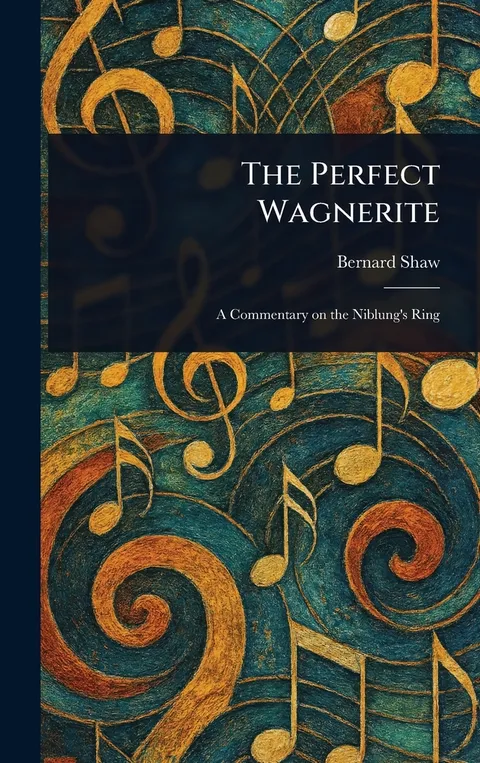
G. B. Shaw (1856-1950) wrote "The Perfect Wagnerite" as a philosophical examination of Richard Wagner's epic four-opera cycle, "Der Ring des Nibelungen" ("The Ring of the Nibelung"). A tremendously accomplished dramatist himself, Shaw seemed perfectly poised to turn his critical eye on Wagner's 19th century masterpiece. Wagner completed "The Ring" in 1853, after decades of effort. A work of such ambition takes much unpacking, and so Shaw offers us his critique. In his preface, Shaw writes, "All I pretend to do in this book is to impart the ideas which are most likely to be lacking in the conventional Englishman's equipment… I venture to add my commentary to what has already been written by musicians who are no revolutionists, and revolutionists who are no musicians". And economic revolution is precisely what G. B. Shaw sees in this opera. Wagner wrote "The Ring" as a young political radical, steeped in the anarchist ideology of his day. Shaw views the opera as a critique of capitalism and industrial revolution. His Marxist reading is not surprising—he was a leading Socialist figure of his time, helping to propel the fledgling Fabian Society into public awareness. Shaw does a great deal here to further the "cult of Wagner" that remains strong today. Entertaining as it is compelling, "The Perfect Wagnerite" stands as a principle commentary on one of opera's most daring compositions.
Bernard Shaw
From 26 July 1856 to 2 November 1950, Irish playwright, critic, polemicist, and political activist George Bernard Shaw was alive. He preferred to be referred to simply as Bernard Shaw. From the 1880s until his death and even after, he had a significant impact on Western politics, theater, and society. He produced more than sixty plays, including classics like Saint Joan (1913), Pygmalion (1913), and Man and Superman (1902). (1923). Shaw became a well-known playwright during his time and was awarded the Nobel Prize in literature in 1925 for his works that combine historical allegory and contemporary satire. Before Shaw's first play, Arms and the Man, published in 1894, became a success in the public eye, years passed. He tried to infuse new realism into English-language drama, influenced by Henrik Ibsen. He had established himself as a reputable theater and music critic by the mid-1880s. After having a political awakening, he joined the gradualist Fabian Society and swiftly advanced to the position of principal pamphleteer. Before Shaw's first play, Arms and the Man, published in 1894, became a success in the public eye, years passed. He tried to infuse new realism into English-language drama, influenced by Henrik Ibsen.
More by Bernard Shaw




Why Readwise Books?
Readwise Books is an ebook & audiobook platform that automatically logs how much you and your friends read, making it fun and easy to read more. Learn more →