Report an issue
Tell us what's wrong and we'll take a look.
Thanks – we got it. We'll review and follow up if needed.
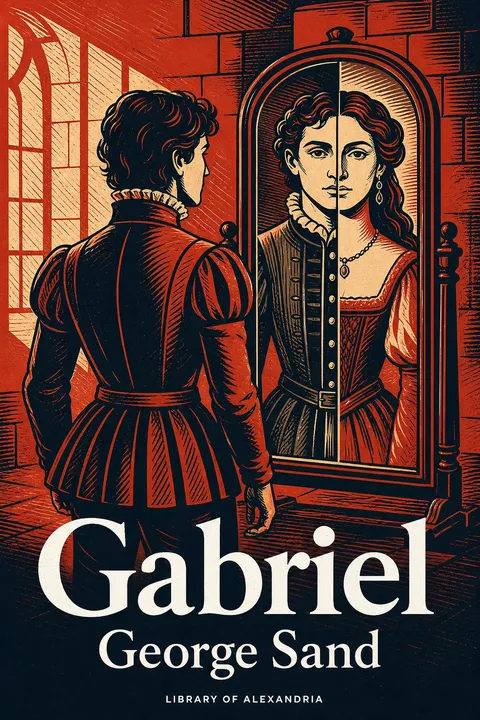
Raised to inherit a title, taught to command a sword, and denied the truth about a body: what happens when a carefully constructed identity begins to unravel?
In George Sand's Gabriel, a grandfather's determination to preserve the family succession shapes an entire childhood. Gabriel de Bramante grows up as a boy, educated in classical languages and trained in the accomplishments of a young nobleman. But the discovery of a long-concealed secret brings that privileged upbringing into conflict with the roles society assigns to women.
Set in Renaissance Italy, this novel in dialogue brings family intrigue and philosophical argument into intimate contact. Gabriel's bond with the charming, wayward cousin Astolphe becomes a passionate struggle over what love may demand-and what no person should have to surrender. Across a world of aristocratic ambition, carnival disguises, and competing claims to inheritance, Sand asks whether education, clothing, custom, or desire can determine who someone is. The dramatic form lets readers hear those questions tested in conversation, where affection and conviction do not always agree.
What readers find inside:
- A concealed upbringing - Gabriel's education as a male heir exposes the unequal possibilities offered to men and women.
- Love under pressure - The relationship with Astolphe tests the boundary between devotion and possession.
- Dynastic intrigue - A family's concern for title and inheritance places private life at the service of ambition.
- Renaissance Italy - Aristocratic households, city streets, and carnival settings frame a conflict between appearance and identity.
- Ideas in dialogue - Arguments about gender and personal liberty emerge through voices with urgent emotional stakes.
For readers of French classics, fiction about gender and identity, and unconventional love stories, Gabriel offers a searching encounter with questions that remain deeply personal today.
Enter Gabriel's world and follow a struggle to choose a life beyond the role assigned at birth.
George Sand
George Sand, also known as the pen name Amantine Lucile Aurore Dupin de Francueil, was a French novelist, memoirist, and journalist. Sand was one of the most popular writers in Europe during her lifetime, more well-known than Victor Hugo or Honore de Balzac in England in the 1830s and 1840s, and is regarded as one of the most notable writers of the European Romantic era, having published over 50 volumes of various works, including tales, plays, and political texts, in addition to her 70 novels. George Sand, like her great-grandmother, Louise Dupin, who she idolized, pushed for women, defended desire, condemned marriage, and resisted traditional society's preconceptions. Maurice Dupin de Francueil and Sophie-Victoire Delaborde welcomed Amantine Lucile Aurore Dupin, the future George Sand, into the world on Meslay Street in Paris on July 1, 1804. She was the paternal great-granddaughter of Marshal of France Maurice de Saxe (1696-1750), and her maternal grandpa was Antoine Delaborde, master paulmier and birder.
More by George Sand








Why Readwise Books?
Readwise Books is an ebook & audiobook platform that automatically logs how much you and your friends read, making it fun and easy to read more. Learn more →