Report an issue
Tell us what's wrong and we'll take a look.
Thanks – we got it. We'll review and follow up if needed.
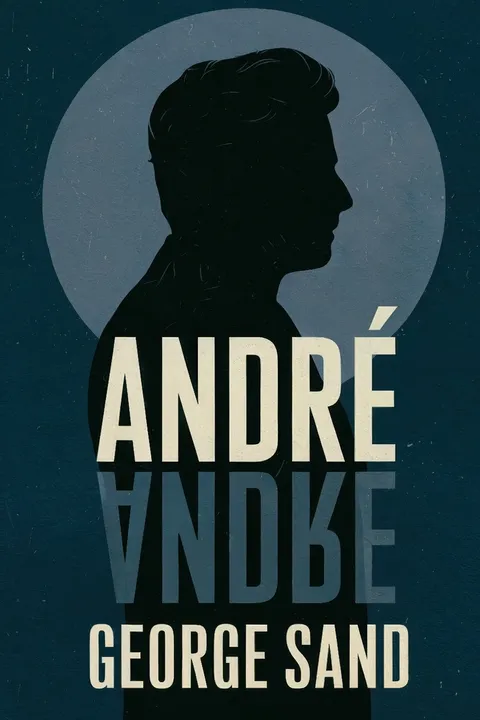
The love between André and Geneviève is real. The world they inhabit is not interested in that.
Published in 1835, André is one of George Sand's most intimate and precisely observed novels - a short, quietly devastating story of a cross-class love affair in the Berry countryside of central France, set against the rigid social architecture of early nineteenth-century French society. André is a young nobleman, sensitive and well-meaning but unable to defy the authority of his father. Geneviève is a maker of artificial flowers - a grisette, a self-supporting working-class woman of unusual intelligence and moral seriousness, ill-fitted to the conventional life available to women of her station and no better suited to the one André might offer her.
Sand described the novel herself as an "étude de sentiment" - a study of feeling - and the phrase is perfectly judged. André does not thunder or declaim. It watches. It pays close attention to the way social convention operates not as abstract force but as lived daily pressure: in gossip, in a father's disapproval, in the gap between what two people feel and what the world will allow them to do about it. The result is a novel that is both a love story and a social indictment, both a character study of unusual specificity and a meditation on the structures that crush what is most genuine in people.
Written in Venice in the spring of 1834 and first published in the Revue des Deux Mondes in 1835, André is often cited as the novel in which Sand's fiction begins its pivot toward the realism that would define her great pastoral novels of the 1840s. The setting - the Berry countryside she knew from childhood - is rendered with the intimate authority of someone who loves a place deeply enough to see it clearly.
From one of the most influential, courageous, and restlessly original writers of the nineteenth century, André is a small novel with a large and enduring truth at its heart: that the world's indifference to love is not a fact of nature, but a choice - and that the cost of that choice is always paid by those who can least afford it.
George Sand
George Sand, also known as the pen name Amantine Lucile Aurore Dupin de Francueil, was a French novelist, memoirist, and journalist. Sand was one of the most popular writers in Europe during her lifetime, more well-known than Victor Hugo or Honore de Balzac in England in the 1830s and 1840s, and is regarded as one of the most notable writers of the European Romantic era, having published over 50 volumes of various works, including tales, plays, and political texts, in addition to her 70 novels. George Sand, like her great-grandmother, Louise Dupin, who she idolized, pushed for women, defended desire, condemned marriage, and resisted traditional society's preconceptions. Maurice Dupin de Francueil and Sophie-Victoire Delaborde welcomed Amantine Lucile Aurore Dupin, the future George Sand, into the world on Meslay Street in Paris on July 1, 1804. She was the paternal great-granddaughter of Marshal of France Maurice de Saxe (1696-1750), and her maternal grandpa was Antoine Delaborde, master paulmier and birder.
More by George Sand




Why Readwise Books?
Readwise Books is an ebook & audiobook platform that automatically logs how much you and your friends read, making it fun and easy to read more. Learn more →