Report an issue
Tell us what's wrong and we'll take a look.
Thanks – we got it. We'll review and follow up if needed.
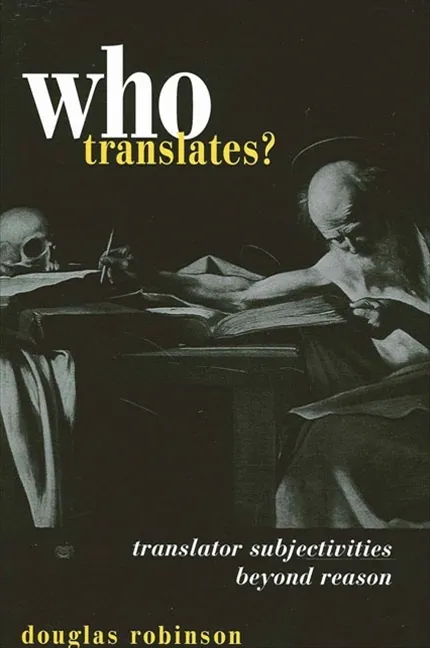
Argues for a postrationalist conception of translation based not on the translator's rational control of words and meanings but on a flowing through the translator of voices and textualities.
2001 CHOICE Outstanding Academic Title
Translators have long claimed that their job is to "step aside and let the source author speak through them." In Who Translates? Douglas Robinson uses this adage to set up a series of "postrationalist" perspectives on translation, all based on the recognition that translation has always been thought of in terms of the translator's surrender to forces beyond his or her rational control. Exploring this theme, Robinson examines Plato's Ion, Philo Judaeus and Augustine on the Septuagint, Paul on inspired interpreters, Joseph Smith on the Book of Mormon, and Schleiermacher, Marx, and Heidegger on translation. He traces the imaginative and historical linkages between twentieth-century conceptions of ideology and ancient conceptions of spirit-channeling, and the performative inversion of power relations by which the "channel" (or translator) comes to wield the source author as his or her tool. And he argues throughout for a postrationalist conception of translation based not on the translator's rational control of words and meanings but rather on a flowing through the translator of voices and textualities.
Douglas Robinson
Douglas Robinson is Dean of Arts and Chair Professor of English at Hong Kong Baptist University. He is the author of many books, including Who Translates? Translator Subjectivities Beyond Reason, also published by SUNY Press.
More by Douglas Robinson


Why Readwise Books?
Readwise Books is an ebook & audiobook platform that automatically logs how much you and your friends read, making it fun and easy to read more. Learn more →