Report an issue
Tell us what's wrong and we'll take a look.
Thanks – we got it. We'll review and follow up if needed.
Certain Artists makes for compelling reading. Huysmans' idiosyncratic assessments throw light on his aesthetic preoccupations, past and present, and hint at the spiritual journey he was about to undertake. It includes over 140 black and white illustrations, as well as an introduction, setting the book in the context of its time, comprehensive notes, and a glossary of the artists mentioned.
First published in 1889, but never before translated into English, this second collection of J.-K. Huysmans' art criticism serves as a companion to the author's iconoclastic Modern Art (L'Art moderne) of 1883. Unlike the earlier volume, Huysmans wastes little time lambasting the art of the establishment, the Academic painters whose work had lined the annual Salon for years. Instead, he concentrates on a series of his own artistic enthusiasms, which he explores with his trademark spleen and invective. There are extended analyses of Edgar Degas's controversial portraits of women at their toilette; of Odilon Redon's monstrous and disturbing engravings, of Gustave Moreau's heiratic paintings that had such a powerful influence on Against Nature; and of Felicien Rops, whose Satanic engravings, particularly his images of women as agents of the devil, would haunt Huysmans' subsequent novel, Là-bas, of 1891.
J -K Huysmans
Huysmans' writing is renowned for its unique use of the French language, extensive vocabulary, descriptions, caustic wit, and broad erudition. With the publishing of A rebours, he became identified with the decadent movement, having previously been deemed part of Naturalism. His writing reflected his profound pessimism, which led him to the philosophy of Arthur Schopenhauer. Later works emphasized his interest in Catholicism, religious conversion, and becoming an oblate. He went into great detail about the symbolism of Christian architecture in La cathedrale (1898), which was set in Chartres and included the cathedral as its focal point. Huysmans was born in Paris, France, in the year 1848. His father, Godfried Huysmans, was Dutch and a lithographer by trade. His mother, Malvina Badin Huysmans, had worked as a schoolteacher. Huysman's father died when he was eight years old. Huysmans loathed his stepfather, Jules Og, a Protestant who owned a Parisian bookbindery. He published his writing under the name Joris-Karl Huysmans in honor of his father's genealogy. His first big publication was a collection of prose poems titled Le drageoir aux epices (1874), which was heavily influenced by Baudelaire. They drew little attention but offered hints of the author's unique style.
More by J -K Huysmans
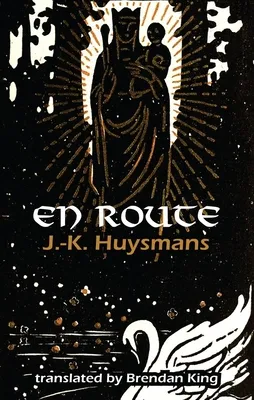
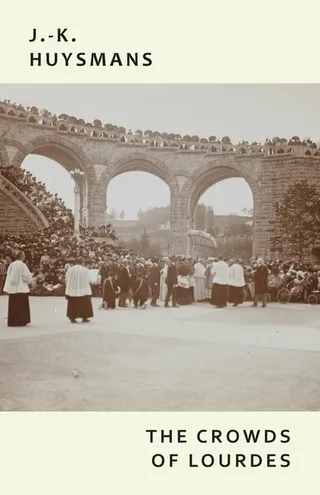
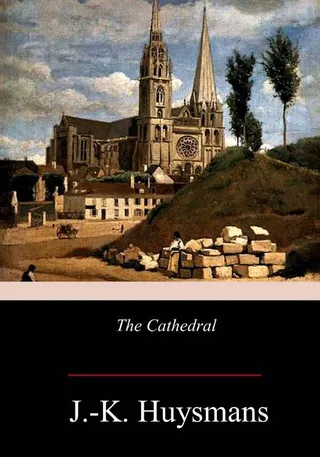
Brendan King
Translated by
Brendan King is a freelance writer, reviewer and translator with a special interest in late nineteenth-century French fiction. His Ph.D. was on the life and work of J.-K.Huysmans. He has translated Marthe, Parisian Sketches, The Vatard Sisters, Stranded (En Rade), Drifting, Against Nature, La Bas, Modern Art, Certain Artists, Three Primitive Painters, En Route, The Cathedral, and The Oblate. by J.-K. Huysmans for Dedalus. He has also edited The Life of J.-K.Huysmans by Robert Baldick for Dedalus. He lives in Paris.


Why Readwise Books?
Readwise Books is an ebook & audiobook platform that automatically logs how much you and your friends read, making it fun and easy to read more. Learn more →