Report an issue
Tell us what's wrong and we'll take a look.
Thanks – we got it. We'll review and follow up if needed.
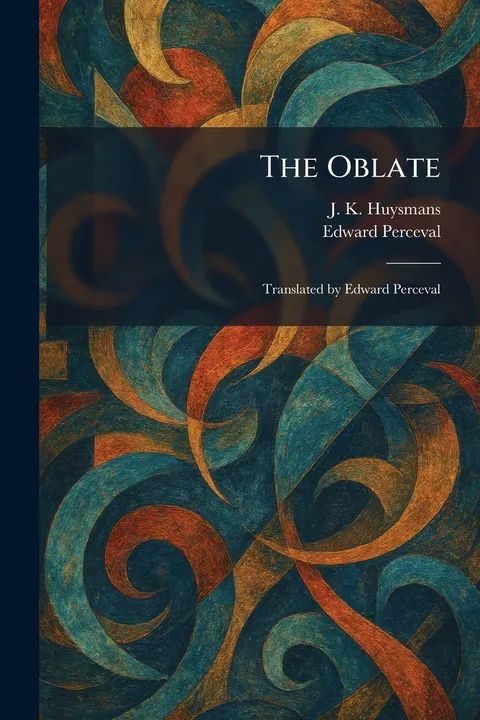
"The Oblate" concludes J. K. Huysmans's semi-autobiographical series following the spiritual odyssey of Durtal. Having journeyed from the dark depths of Satanism to the aesthetic beauty of the cathedral, Durtal now seeks a life of quiet contemplation as a lay oblate at a Benedictine abbey. This masterwork explores the intricate relationship between art, liturgy, and faith, offering a profound meditation on the rhythms of monastic life and the search for spiritual sanctuary in a modernizing world.
Through the eyes of Durtal, Huysmans provides an exquisite examination of Catholic ritual, Gregorian chant, and the symbolic power of the religious life. The narrative is as much an intellectual exploration as it is a personal one, capturing the protagonist's internal struggle to reconcile his artistic sensibilities with the demands of his devotion. "The Oblate" stands as a significant contribution to the Decadent movement's shift toward the divine, portraying the quiet beauty and spiritual discipline found within the walls of the cloister.
This work has been selected by scholars as being culturally important, and is part of the knowledge base of civilization as we know it. This work was reproduced from the original artifact, and remains as true to the original work as possible. Therefore, you may see the original copyright references, library stamps (as most of these works have been housed in our most important libraries around the world), and other notations in the work.
This work is in the public domain in the United States of America, and possibly other nations. Within the United States, you may freely copy and distribute this work, as no entity (individual or corporate) has a copyright on the body of the work.
As a reproduction of a historical artifact, this work may contain missing or blurred pages, poor pictures, errant marks, etc. Scholars believe, and we concur, that this work is important enough to be preserved, reproduced, and made generally available to the public. We appreciate your support of the preservation process, and thank you for being an important part of keeping this knowledge alive and relevant.
J K Huysmans
The author of "The Cathedral," J.K. Huysmans, was a French author and art critic who is most known for his debaucherous writings. The spiritual journey of a man named Durtal, who is looking for meaning and purpose in his life, is explored in the book "The Cathedral''. Huysmans was well recognized for his fascination with the occult and religion, and "The Cathedral'' emphasizes these themes. The work examines the essence of faith, sin, and redemption via Durtal's journey. Huysmans' writing is intensely psychological and introspective as he explores Durtal's innermost thoughts and motivations. Huysmans is best known for his literary works, but he was also a renowned art critic who supported the Symbolist movement. He was renowned for his capacity to uncover spiritual significance in even the most decadent and divisive works of art, a subject that was frequently explored in his writing on the linkages between art and spirituality.
More by J K Huysmans


Why Readwise Books?
Readwise Books is an ebook & audiobook platform that automatically logs how much you and your friends read, making it fun and easy to read more. Learn more →