Report an issue
Tell us what's wrong and we'll take a look.
Thanks – we got it. We'll review and follow up if needed.
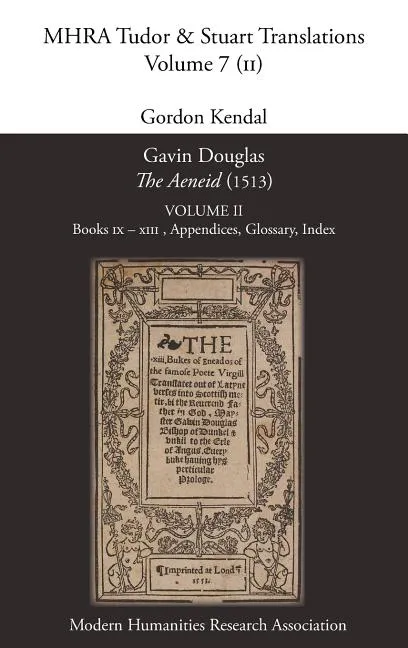
Virgil's story of Aeneas, exiled from fallen Troy and leading his people to a new life through the founding of Rome, was familiar in the middle ages. The first true and full translation into any form of English was completed in Scotland in 1513 by Gavin Douglas and published in print forty years later. His version (still considered by some to be the finest of all) is significant historically but also for its intrinsic qualities: vigour, faithfulness, and a remarkable flair for language. Douglas was a scholar as well as a poet and brought to his task a detailed knowledge of the Latin text and of its major commentators, together with a sensitive mastery of his own language, both Scots and English, contemporary and archaic. The present edition is the first to regularise his spelling and make access easier for the modern reader without compromising the authentic Scots-English blend of his language. Glossaries (side- and end-) explain obscurities in his vocabulary while the introduction and notes set the work in context and indicate how Douglas understands and refocusses the great Virgilian epic. It will be of interest to medievalists and Renaissance scholars, to classicists and to students of the English language, and not least to the general reader whom Douglas had especially in mind.
Virgil
Born in 70 BCE, at the height of the Roman Empire, epic poet Publius Vergilius Maro, or Virgil, as he is now known, was the son of a farmer in Northern Italy. He was educated in Cremona, Milan and finally Rome before returning to the North to begin work on Eclogues which was published in 37BCE. When a civil war forced him south into Naples, he completed the farming poem Georgics. Soon after, Virgil began working on his masterwork, The Aeneid, a story that derived from the existing tradition of the Greek hero Aeneas. Virgil worked on The Aeneid for eleven years but was never satisfied enough to call it complete. After returning from Greece, Virgil fell ill, and before his death he ordered the incomplete manuscript be burned. He died in 19 BCE, and shortly after The Aeneid was published against his wishes.
More by Virgil








Why Readwise Books?
Readwise Books is an ebook & audiobook platform that automatically logs how much you and your friends read, making it fun and easy to read more. Learn more →