Report an issue
Tell us what's wrong and we'll take a look.
Thanks – we got it. We'll review and follow up if needed.
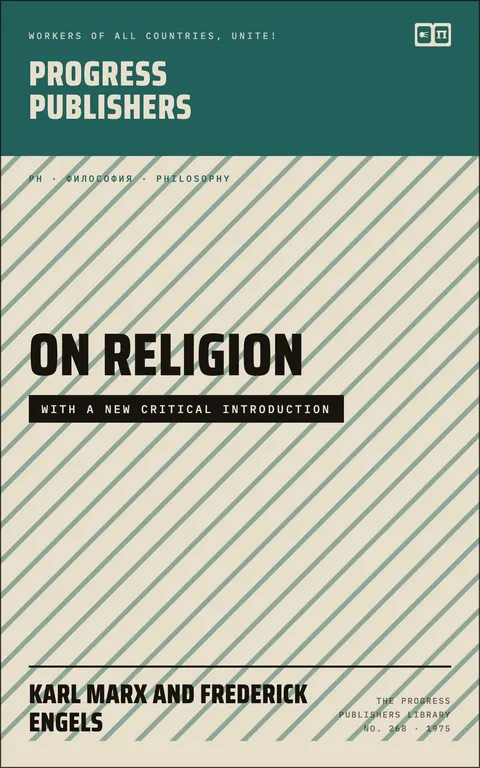
The pieces gathered here span more than half a century, from a footnote in Marx's doctoral dissertation of 1841 to Engels's essays on early Christianity written in the last year of his life. They were never conceived as a book; the editors made them one, cutting extracts from Capital, Anti-Duhring, The German Ideology and the Manifesto, and adding letters and journalism.
Read on their own, the texts are far richer than the label suggests. Their core is a materialist explanation of where religion comes from - not a sneer at the credulous but an account of need, arising in the earliest societies from helplessness before nature and in class society from the oppression of the working masses and their apparent helplessness against their exploiters.
Two things in the collection are stronger still. The first is the famous passage from the 1844 Contribution to the Critique of Hegel's Philosophy of Law, which is almost always quoted in half. Before the sentence about opium comes the description of religion as the sigh of the oppressed creature and the heart of a heartless world - closer to compassion than contempt - and what follows is not a programme of unbelief but a demand to overthrow the conditions that make people wretched.
The second is Engels's late work on the origins of Christianity, above all On the History of Early Christianity, which opens by noting the notable points in common between early Christianity and the modern workers' movement, both originally movements of oppressed people. Here Marxism looks at a religion not to debunk it but to understand what form the hopes of the poor once took.
New critical introduction by Dmitry Chasovennikov, on the distance between these texts and the frame built around them.
Karl Marx
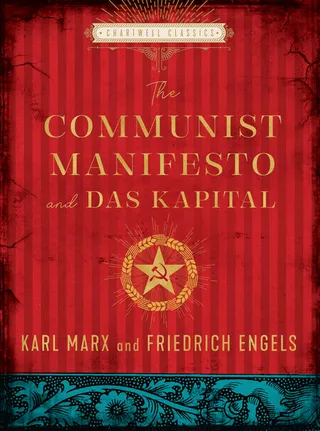
Karl Marx, a German philosopher, economist and political theorist, was born in Trier, Germany in 1818. His works, including The Communist Manifesto (co-authored with Friedrich Engels) and Das Kapital, laid the foundations for the modern communist movement.
More by Karl Marx

Friedrich Engels
Born in Barmen, Germany in 1820, Friedrich Engels was a philosopher, economist and political theorist who is known for his influence on socialist philosophy. After meeting Marx in 1844, Engels co-authored a number of groundbreaking works, including The Communist Manifesto.
More by Friedrich Engels



Why Readwise Books?
Readwise Books is an ebook & audiobook platform that automatically logs how much you and your friends read, making it fun and easy to read more. Learn more →