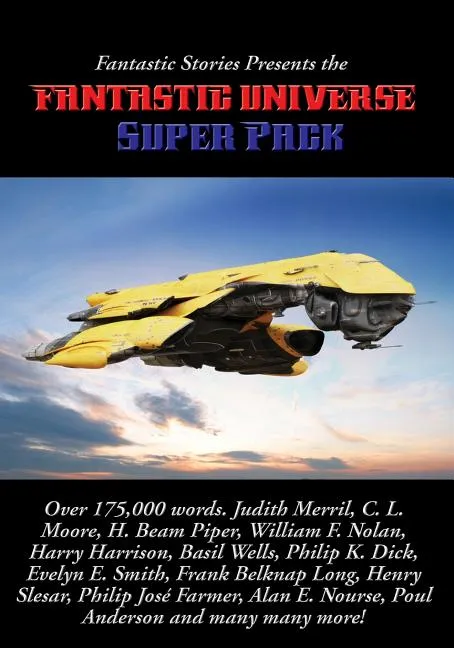
Fantastic Stories Presents the Fantastic Universe Super Pack #1 - A Positronic Book
Report an issue
Tell us what's wrong and we'll take a look.
Thanks – we got it. We'll review and follow up if needed.
More than 175,000 words of classic science fiction and fantasy are gathered in this oversized first volume of the Fantastic Universe Super Pack series. Launched with its June-July 1953 issue and continuing through March 1960, Fantastic Universe was part of the great 1950s boom in science fiction magazine publishing, lasting for 69 issues and outliving many of the magazines that appeared in the same crowded market. This collection brings together space adventure, robots, alien encounters, time-slip fiction, strange transformations, Martian stories, speculative satire, psychological danger, and vintage fantasy by some of the field's best-known writers and skilled magazine professionals.
Included in this volume are:
"Exile from Space" by Judith Merril
"Cogito, Ergo Sum" by John Foster West
"Grove of the Unborn" by Lyn Venable
"Two Plus Two Makes Crazy" by Walt Sheldon
"Song in a Minor Key" by C. L. Moore
"The Helpful Robots" by Robert J. Shea
"There Will Be School Tomorrow" by V. E. Thiessen
"The Answer" by H. Beam Piper
"It's All Yours" by Sam Merwin, Jr.
"Rex ex Machina" by Frederic Max
"This One Problem" by M. C. Pease
"Small World" by William F. Nolan
"The Cartels Jungle" by Irving E. Cox, Jr.
"This Is Klon Calling" by Walt Sheldon
"The Velvet Glove" by Harry Harrison
"Moment of Truth" by Basil Wells
"No Hiding Place" by Richard R. Smith
"Beyond the Door" by Philip K. Dick
"The Laminated Woman" by Evelyn E. Smith
"Be It Ever Thus" by Robert Moore Williams
"The Man the Martians Made" by Frank Belknap Long
"My Father, the Cat" by Henry Slesar
"I Like Martian Music" by Charles E. Fritch
"They Twinkled Like Jewels" by Philip José Farmer
"The Mighty Dead" by William Campbell Gault
"Out of the Earth" by George Edrich
"Martyr" by Alan E. Nourse
"To Remember Charlie By" by Roger Dee
"The Amazing Mrs. Mimms" by David C. Knight
"The Sensitive Man" by Poul Anderson
Together these stories show the range and energy of mid-century magazine science fiction: quick invention, bold premises, strange futures, human anxiety, comic reversals, and the pleasure of speculative storytelling before the field hardened into narrower categories. For readers of Golden Age science fiction, vintage fantasy, pulp magazines, robot fiction, alien worlds, and classic short fiction, this Super Pack offers a substantial single-volume return to one of the liveliest periods in the field's history. If you enjoyed this book, search for "Positronic Publishing Super Pack" and explore the other Super Packs in the series. Explore other exciting Positronic Books devoted to classic science fiction, fantasy, and mystery.
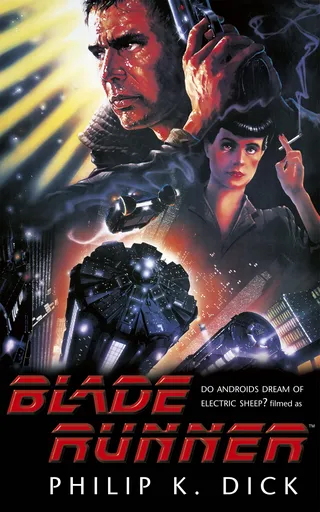
Philip K. Dick
Philip K Dick was born in Chicago in 1928 and lived most of his life in California. He attended college for a year at Berkeley. Apart from writing, his main interest was music. He won the Hugo Award for his classic novel of alternative history, ‘The Man in the High Castle’ (1962). He was married five times and had three children. He died in March 1982.
More by Philip K. Dick










Anderson Anderson
Poul Anderson (1926-2001) was an American science fiction and fantasy writer known for his range, technical intelligence, historical imagination, and long career across the major magazines and paperback markets. He published his first story in 1947 while still a student at the University of Minnesota and went on to become one of the field's most respected writers, winning multiple Hugo and Nebula Awards. Anderson wrote hard science fiction, space opera, alternate history, fantasy, time-travel stories, and works shaped by anthropology, physics, politics, myth, and historical change.Anderson's best-known works include the Technic History stories, the Time Patrol series, Tau Zero, The High Crusade, Three Hearts and Three Lions, and many shorter works of science fiction and fantasy. His fiction often combines adventure with serious speculation about culture, empire, freedom, exploration, and the costs of civilization. "The Sensitive Man" shows Anderson working in the magazine tradition where a strong speculative premise is driven by character pressure, danger, and social consequence.
More by Anderson Anderson

Harrison Harrison
Harry Harrison (1925-2012) was an American science fiction writer, editor, illustrator, and satirist best known for fast-moving, anti-authoritarian, often comic speculative fiction. He became widely known for the Stainless Steel Rat stories, Bill, the Galactic Hero, and Make Room! Make Room!, the novel that inspired the film Soylent Green. Harrison's work often combines adventure with satire, distrust of bureaucracy, suspicion of militarism, and sympathy for rogues, rebels, and practical survivors.Harrison's early career was closely tied to the magazine and comics worlds, and his fiction retained the speed, clarity, and visual snap of those markets. He was equally comfortable with space adventure, social satire, future crime, and comic reversals, making him a strong fit for a Fantastic Universe collection. "The Velvet Glove" reflects the kind of sharp, idea-driven magazine science fiction that helped establish Harrison's reputation: accessible, energetic, sceptical, and built around the collision between human behaviour and speculative invention.
More by Harrison Harrison



Why Readwise Books?
Readwise Books is an ebook & audiobook platform that automatically logs how much you and your friends read, making it fun and easy to read more. Learn more →