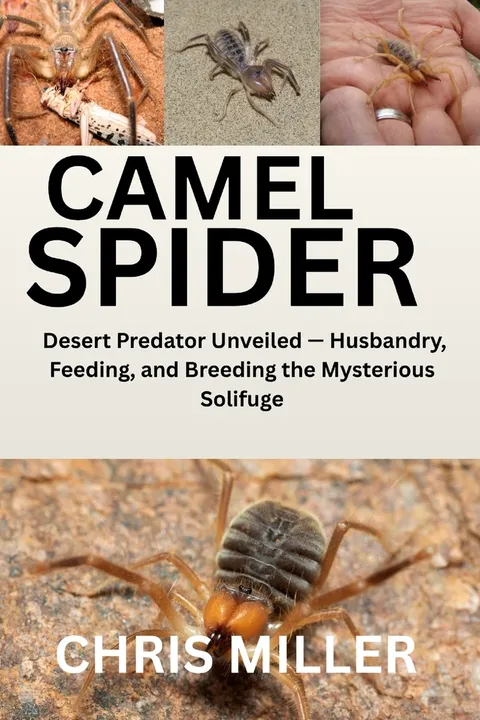
Camel Spider
Desert Predator Unveiled - Husbandry, Feeding, and Breeding the Mysterious Solifuge
Report an issue
Tell us what's wrong and we'll take a look.
Thanks – we got it. We'll review and follow up if needed.
Camel spiders (order Solifugae) are formidable opportunistic predators in arid and semi-arid ecosystems. Although they lack venom, their powerful chelicerae, keen sensory organs, and rapid movement allow them to capture and subdue a wide variety of prey. Their diet includes insects, scorpions, small lizards, and even small mammals when opportunity permits. This versatility in prey selection underlines their role as essential mesopredators in desert food webs. By regulating insect populations-especially pests such as termites and beetles-they contribute to ecological balance. Their scavenging behavior also aids in decomposition processes, recycling organic matter into the ecosystem. As nocturnal and crepuscular hunters, camel spiders avoid extreme heat, emerging during cooler hours to actively patrol their territory. Their ability to detect vibrations and chemical cues makes them effective hunters in darkness, and their predatory presence shapes the behavior and distribution of both prey and competing arthropods in the habitat.
Camel spiders are classified within the class Arachnida, which also includes spiders, scorpions, ticks, and mites. Within this class, they form their own distinct order-Solifugae. This order contains more than 1,100 described species across about 12 families. Camel spiders are unified by several morphological traits, such as large, forward-projecting chelicerae, segmented opisthosomas (abdomens), and leg-like pedipalps used for sensory navigation and prey manipulation.














Why Readwise Books?
Readwise Books is an ebook & audiobook platform that automatically logs how much you and your friends read, making it fun and easy to read more. Learn more →