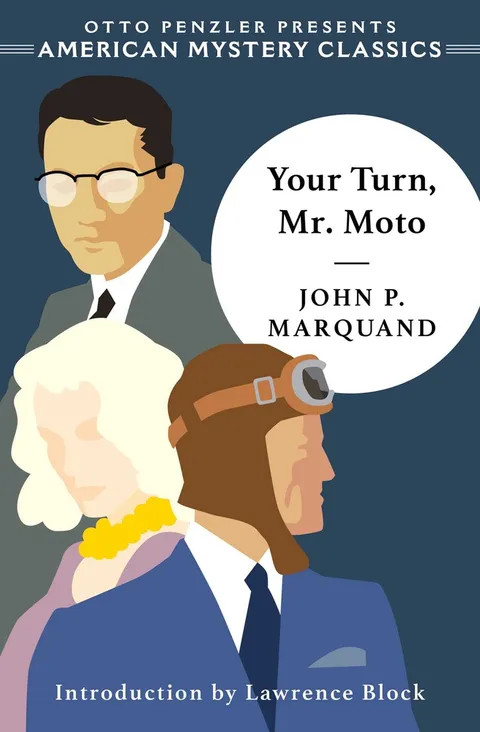
Your Turn, Mr. Moto
Report an issue
Tell us what's wrong and we'll take a look.
Thanks – we got it. We'll review and follow up if needed.
During World War I, Casey Lee was one of the best pilots around. Known for his boldness and bravery, he was heralded as a hero. But now the war's over, the Depression is on, and Americans no longer have time for public heroes, leaving Lee washed up and desperate for work. When a tobacco company suggests he fly from Japan to North America, a feat which has never been accomplished, Lee jumps at the opportunity. Unfortunately, the idea is abandoned soon after he arrives in Tokyo, and he receives the news in the midst of one of the daily drinking binges with which he now passes the time.
Stranded in a foreign land with wavering loyalty to his home country, Lee has few friends, but his situation changes suddenly when he meets the intriguing Mr. Moto, a Japanese man who takes a particular interest in the down-and-out pilot. By the time he meets Sonya, Moto's beautiful Russian colleague, Casey has unknowingly entered into a life-threatening plot of international espionage at the service of Japan's imperial interests -- but will he realize the severity of his situation before it's too late?
The first installment in Pulitzer Prize-winner John P. Marquand's iconic mystery series, Your Turn, Mr. Moto was the novel that introduced Japan's most skillful spy, famously portrayed by Peter Lorre in a series of films. The book is a classic of espionage fiction, and kick-started the crime fiction career of "the most successful novelist in the United States." (Time)
John P. Marquand
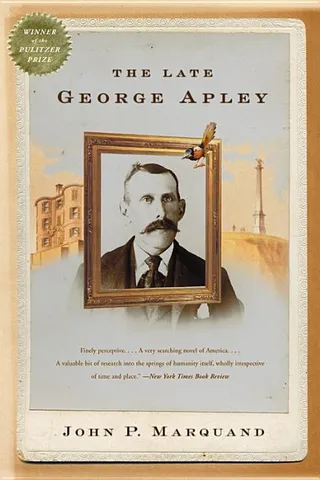
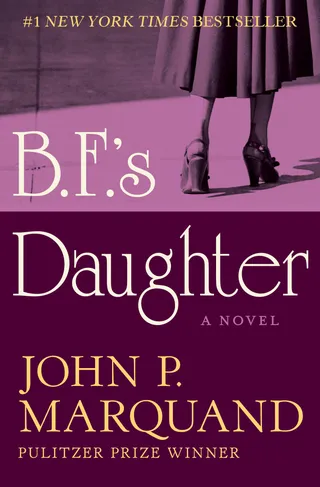
John P. Marquand (1893–1960) was a Pulitzer Prize–winning author, proclaimed “the most successful novelist in the United States” by Life magazine in 1944. A descendant of governors of the Massachusetts Bay Colony, shipping magnates Daniel Marquand and Samuel Curzon, and famed nineteenth-century writer Margaret Fuller, Marquand always had one foot inside the blue-blooded New England establishment, the focus of his social satire. But he grew up on the outside, sent to live with maiden aunts in Newburyport, Massachusetts, the setting of many of his novels, after his father lost the once-considerable family fortune in the crash of 1907. From this dual perspective, Marquand crafted stories and novels that were applauded for their keen observation of cultural detail and social mores. By the 1930s, Marquand was a regular contributor to the Saturday Evening Post, where he debuted the character of Mr. Moto, a Japanese secret agent. No Hero, the first in a series of bestselling spy novels featuring Mr. Moto, was published in 1935. Three years later, Marquand won the Pulitzer Prize for Fiction for The Late George Apley, a subtle lampoon of Boston’s upper classes. The novels that followed, including H.M. Pulham, Esquire (1941), So Little Time (1943), B.F.’s Daughter (1946), Point of No Return (1949), Melvin Goodwin, USA (1952), Sincerely, Willis Wayde (1955), and Women and Thomas Harrow (1959), cemented his reputation as the preeminent chronicler of contemporary New England society and one of America’s finest writers.
More by John P. Marquand






Why Readwise Books?
Readwise Books is an ebook & audiobook platform that automatically logs how much you and your friends read, making it fun and easy to read more. Learn more →