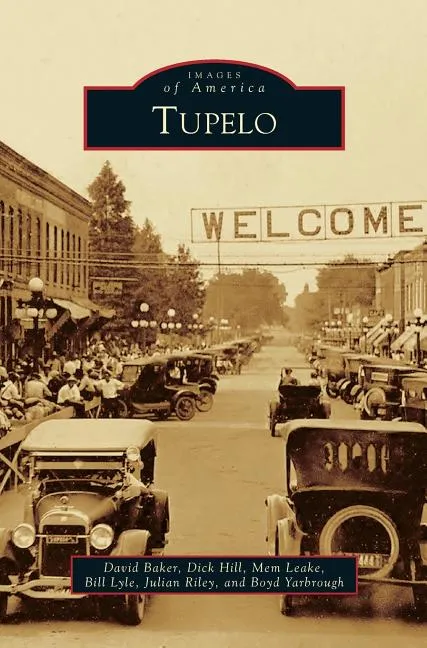
Tupelo
Report an issue
Tell us what's wrong and we'll take a look.
Thanks – we got it. We'll review and follow up if needed.
By 1858, construction on a new railroad from Mobile, Alabama, to Cairo, Illinois, had intersected the Fulton/Pontotoc Road near an area called Gum Pond. That location contained large numbers of tupelo gum trees, and the intersection became known as Tupelo. Many merchants in surrounding communities, like Harrisburg and Richmond, realized that the intersection was going to be a prime area for commerce and began disassembling buildings that housed places of business and relocating them to Tupelo. By the beginning of the Civil War, there were two stores, two hotels, two saloons, and a temporary depot fronting the railroad just south of present-day Main Street. During the Civil War, Tupelo became a major location for shipping grain and livestock to the Confederate army. It also served as headquarters for the Confederate Army of the West and a rest and recreation area for Confederate armies.
David Baker
David Baker is a history and science writer for SimonWhistler.com who holds the world's first PhD in Big History, studying under David Christian. He has delivered award-winning lectures at Macquarie University and the University of Amsterdam, is a visiting lecturer at the University of Paris-Sorbonne, and wrote the YouTube series Crash Course Big History, hosted by John and Hank Green in partnership with the Gates Big History Project. He is the author of The Shortest History of the World, and Sex.
More by David Baker

















Why Readwise Books?
Readwise Books is an ebook & audiobook platform that automatically logs how much you and your friends read, making it fun and easy to read more. Learn more →