Report an issue
Tell us what's wrong and we'll take a look.
Thanks – we got it. We'll review and follow up if needed.
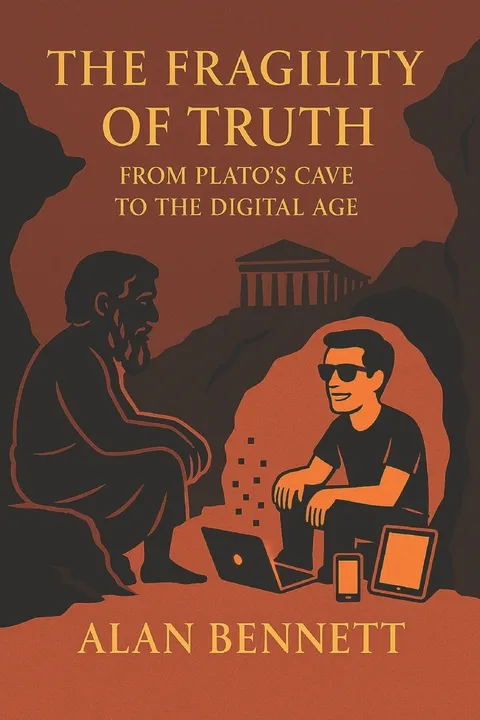
How can we decide what deserves belief when information is abundant, authority is contested and convincing appearances can be manufactured?
The Fragility of Truth: From Plato's Cave to the Digital Age explores a question that reaches into every part of public and private life. We depend on other people for most of what we know. Yet neither unquestioning trust nor permanent suspicion provides a satisfactory basis for judgment. How, then, can we rely on institutions and experts while retaining the capacity to question their conclusions?
Alan Bennett draws on philosophy, legal experience and everyday examples to examine the relationship between truth, belief, evidence and justified confidence. His central distinction is simple but consequential: an event does not change when its history is rewritten. What can be damaged are the records, practices and institutions through which we discover what happened and share reliable knowledge.
The philosophical inquiry begins with Plato and Aristotle and moves through Augustine, Aquinas, Descartes, Locke and Hume to later thinkers concerned with interpretation, commitment, language and power. Their disagreements illuminate practical questions. What makes a statement true? How much evidence is enough? When does interpretation reveal something previously overlooked, and when does it become an excuse to disregard the facts?
The discussion then turns to the institutions through which knowledge reaches us. Courts must decide disputes on the evidence available. Governments combine factual claims with policy choices. Journalists investigate under commercial and political pressures. Religious traditions confront questions of authority and conscience. Scientists and medical practitioners must explain why some findings deserve confidence while others remain tentative.
Digital platforms and artificial intelligence introduce further difficulties. Ranking systems influence what becomes visible. Generated answers can appear authoritative without supplying reliable evidence. Synthetic images and recordings can create false impressions, while the possibility of fabrication can also be used to dismiss genuine records. The book asks what responsible verification requires in this changing environment.
Examples including the Briginshaw decision, Wirecard's collapse and the Columbia shuttle disaster show how evidence can be misunderstood, warnings neglected and apparent confirmation mistaken for independent scrutiny. Chapters on economics, identity, war, art and expertise examine how numbers, loyalties and powerful stories influence what people accept.
Bennett also considers the difficult relationship between protection from harmful falsehood and freedom of expression. Regulation may address real injuries while creating powers that require scrutiny of their own. Clear reasons, proportionate responses, accessible review and the preservation of evidence become essential safeguards.
The final chapters bring these concerns into ordinary life. A family message, an alarming video or a confident public claim can invite us to act before examining its grounds. Responsible judgment involves identifying the claim, seeking relevant evidence, recognising the limits of our competence and correcting errors we have helped to spread.
Substantially revised, reorganised and shortened, this second edition offers a concise introduction for thoughtful general readers. Twenty-six chapters connect the philosophical inheritance with contemporary institutional and personal responsibilities. Chapter-by-chapter further reading provides pathways for those wishing to explore the questions more deeply.
The book makes a practical case for confidence that remains open to correction, institutions that can explain their decisions and a public culture in which evidence can still change minds.






Why Readwise Books?
Readwise Books is an ebook & audiobook platform that automatically logs how much you and your friends read, making it fun and easy to read more. Learn more →