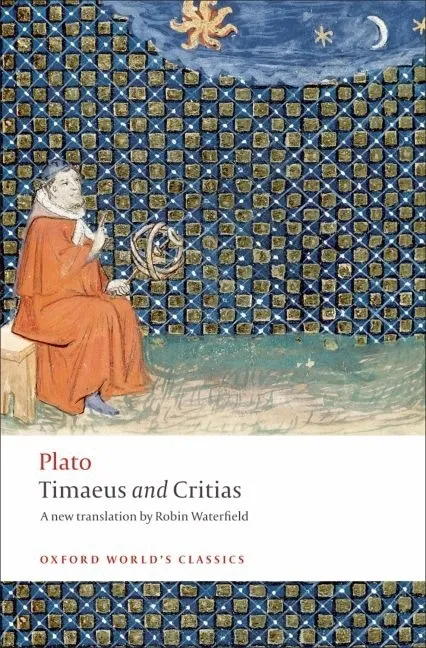
Timaeus and Critias
Report an issue
Tell us what's wrong and we'll take a look.
Thanks – we got it. We'll review and follow up if needed.
Timaeus, one of Plato's acknowledged masterpieces, is an attempt to construct the universe and explain its contents by means of as few axioms as possible. The result is a brilliant, bizarre, and surreal cosmos - the product of the rational thinking of a creator god and his astral assistants, and of purely mechanistic causes based on the behaviour of the four elements. At times dazzlingly clear, at times intriguingly opaque, this was state-of-the-art science in the middle of the fourth century BC. The world is presented as a battlefield of forces that are unified only by the will of God, who had to do the best he could with recalcitrant building materials.
The unfinished companion piece, Critias, is the foundational text for the story of Atlantis. It tells how a model society became corrupt, and how a lost race of Athenians defeated the aggression of the invading Atlanteans. This new edition combines the clearest translation yet of these crucial ancient texts with an illuminating introduction and diagrams.
About the Series: For over 100 years Oxford World's Classics has made available the broadest spectrum of literature from around the globe. Each affordable volume reflects Oxford's commitment to scholarship, providing the most accurate text plus a wealth of other valuable features, including expert introductions by leading authorities, voluminous notes to clarify the text, up-to-date bibliographies for further study, and much more.
Plato
Plato (c. 427-347 BC) was a classical Greek philosopher, mathematician, writer, and student of Socrates. Most of his works, which form some of the core foundations of Western philosophy, are written in the form of dialogues, in which Socrates often figures prominently. His best-known writings include the Republic, the Apology, the Symposium, Crito, and Statesman. Plato's work addresses such diverse themes as the nature of love, human knowledge and understanding, and the ideal form of government.
More by Plato



Robin Waterfield
Robin Waterfield is an independent scholar and translator living in southern Greece. Among his numerous translations of Greek works are Plato's Symposium, Gorgias, and Republic, all published in the Oxford World's Classics series. His other works of history include Creators, Conquerors, and Citizens: A History of Ancient Greece and Taken at the Flood: The Roman Conquest of Greece.
More by Robin Waterfield

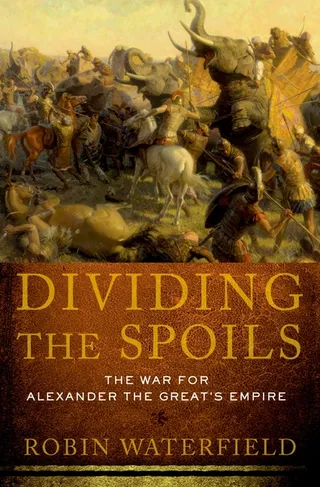
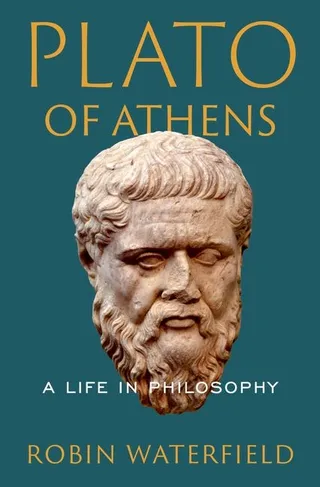
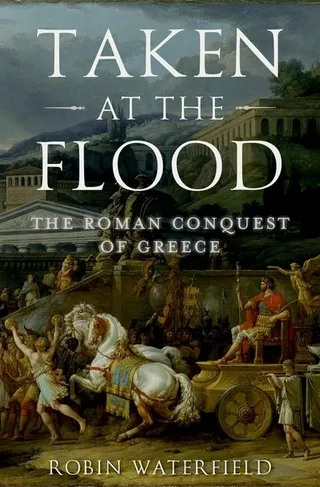
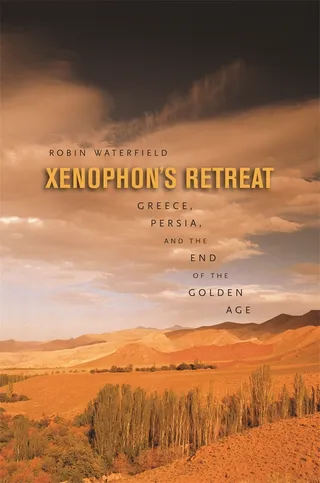
Andrew Gregory
Andrew Gregory is Professor of History and Philosophy of Science, University College London, UK. He is the author of many books on the science of the ancient world, including Plato's Philosophy of Science (Bloomsbury, 2000), Eureka! The Birth of Science (2001), Ancient Greek Cosmogony (Bloomsbury, 2008), The Presocratics and the Supernatural (Bloomsbury, 2013), Anaximander: A Re-Assessment (Bloomsbury, 2016) and Early Greek Philosophies of Nature (Bloomsbury, 2020).
More by Andrew Gregory













Why Readwise Books?
Readwise Books is an ebook & audiobook platform that automatically logs how much you and your friends read, making it fun and easy to read more. Learn more →