Phaedrus
Report an issue
Tell us what's wrong and we'll take a look.
Thanks – we got it. We'll review and follow up if needed.
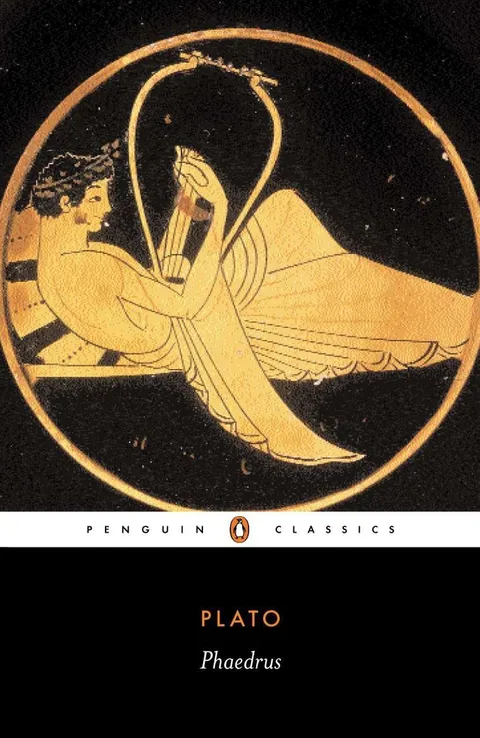
Socrates and Phaedrus, an interlocutor in multiple dialogues, engage in a conversation in Plato's work The Phaedrus. Like Plato's Republic and Symposium, The Phaedrus was probably written around 370 BCE. Although the dialogue is apparently about the subject of love, it actually focuses on the art of rhetoric and how it should be used, as well as topics as varied as metempsychosis (the Greek belief in reincarnation) and sensual love. The classic Chariot Allegory, which depicts the human soul as consisting of a charioteer, a good horse heading upward to the divine, and a bad horse tending downhill to a material incarnation, is one of the dialogue's key passages. Unusually, the dialogue doesn't establish itself as a recounting of the day's events. The dialogue is presented in the straight, unmediated words of Socrates and Phaedrus; there are no intermediaries to set up the discussion or provide background information; it is delivered firsthand, as though we are present for the actual occurrences. This contrasts with dialogues like the Symposium, in which Plato openly provides us with a partial, fifth-hand account of the day's events by creating a number of layers between them and what we hear about them.






Why Readwise Books?
Readwise Books is an ebook & audiobook platform that automatically logs how much you and your friends read, making it fun and easy to read more. Learn more →