Report an issue
Tell us what's wrong and we'll take a look.
Thanks – we got it. We'll review and follow up if needed.
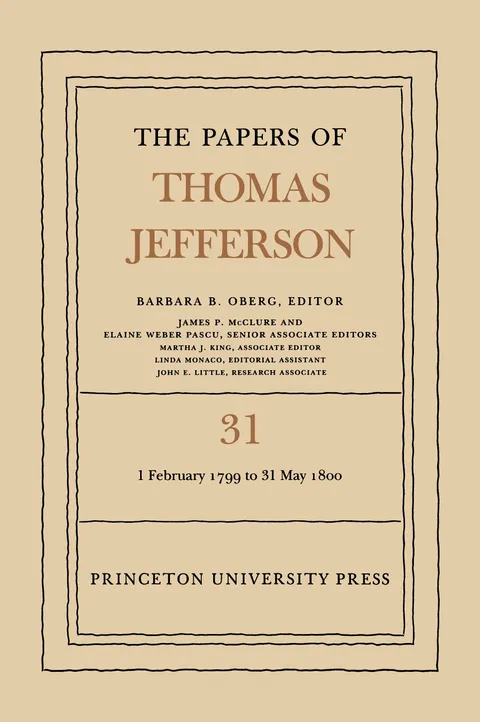
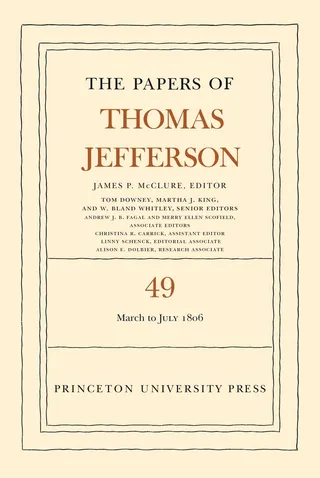
As this volume opens, partisan politics in the United States are building to a crescendo with the approach of the presidential election. Working for a Republican victory, Jefferson consults frequently with Madison, Monroe, and others to achieve favorable results in state elections. He corresponds with controversial journalist James T. Callender. Sifting information from published rumors and private letters, he follows events in Europe, including Bonaparte's unexpected rise to power in France, and sees the value of his tobacco crop plummet as U.S. legislation cuts off the French market. Jefferson grows concerned at Federalist promotion of English common law in American jurisprudence and at proceedings in the Senate against William Duane, printer of the Philadelphia Aurora. Drawing heavily on British legislative practice, however, as well as advice from Virginia, he begins in earnest to compile a manual of parliamentary procedures for the Senate.
As president of the American Philosophical Society, Jefferson calls for reform of the United States census. He publishes an appendix to Notes on the State of Virginia defending his account of the Mingo Indian Logan's legendary 1774 speech. And Jefferson consults Joseph Priestley and Pierre Samuel Du Pont de Nemours about the curriculum for a projected new university in Virginia. While continuing the reconstruction of Monticello, he mourns the death of the infant girl of his younger daughter, Mary Jefferson Eppes.
Thomas Jefferson
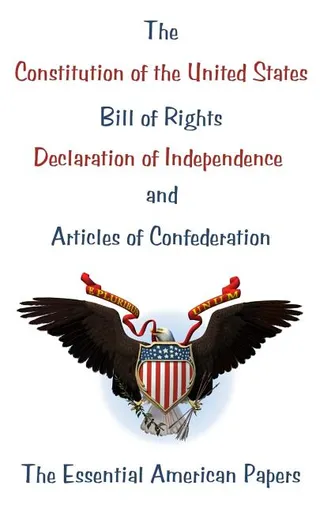
The Constitution of the United States (ratified 1788) established the framework of the federal government and remains the supreme law of the land. The Bill of Rights and subsequent amendments define individual liberties and expand constitutional interpretation. The Declaration of Independence (1776) articulates the principles underlying the formation of the nation, while the Articles of Confederation (ratified 1781) represent the first structure of national governance prior to the Constitution.
More by Thomas Jefferson












Why Readwise Books?
Readwise Books is an ebook & audiobook platform that automatically logs how much you and your friends read, making it fun and easy to read more. Learn more →