Report an issue
Tell us what's wrong and we'll take a look.
Thanks – we got it. We'll review and follow up if needed.
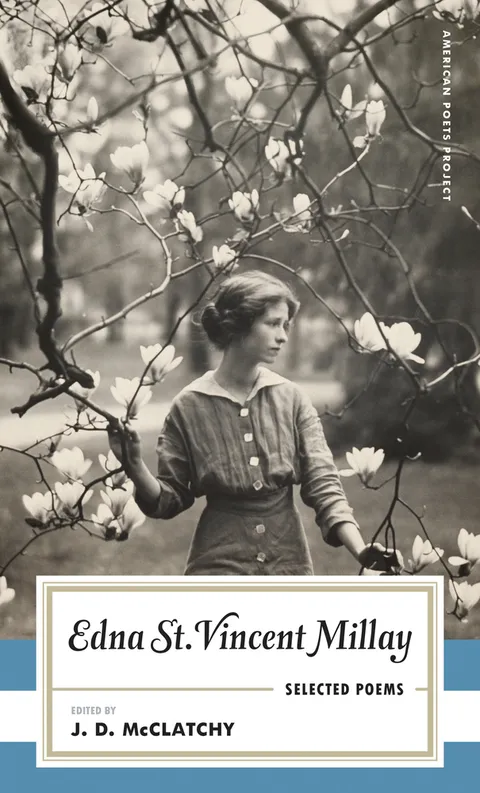
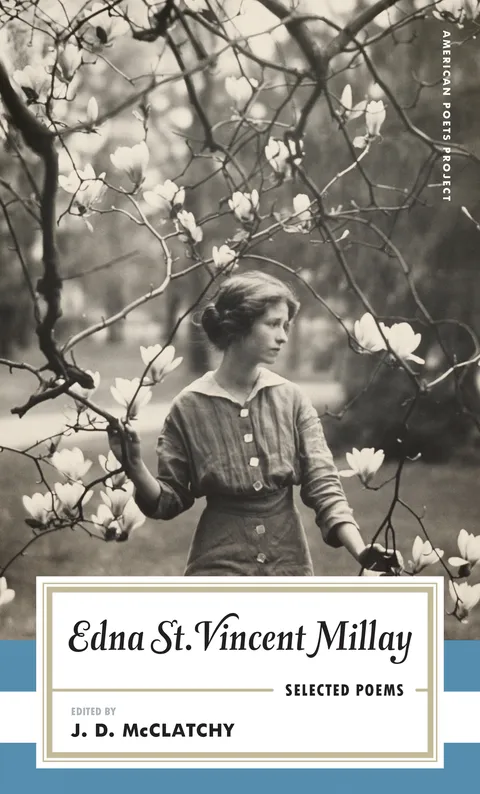
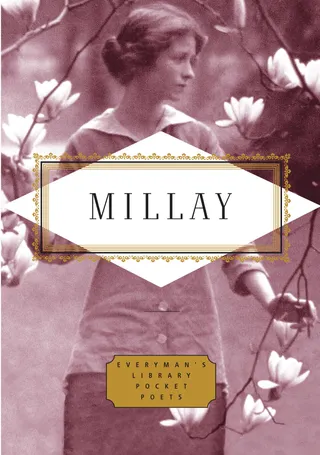
Praised by poets and critics ranging from A. E. Housman and Thomas Hardy to Edmund Wilson, Edna St. Vincent Millay’s bold, exquisite poems take their place among the enduring verse of the twentieth century
Claiming a lyric tradition stretching back to Sappho and Catullus and making it very much her own, Millay won over her contemporaries—and readers ever since—with her passion, erotic candor, formal elegance, and often mischievous wit. J. D. McClatchy's introduction and selections offer new and surprising insights into Millay's achievement.
Included are her most beloved and justly admired poems, such as the wry bohemian anthem “Recuerdo” and the sonnet sequence “Fatal Interview”, the poetic record of a love affair that is presented in its entirety. McClatchy has also chosen works that extend our sense of Millay’s range: translations, her play Aria da Capo, and excerpts from her libretto The King’s Henchman.
“I have for the most part been guided by my taste for Millay at her tautest and truest," writes McClatchy. "There are precise and resonant images everywhere.”
About the American Poets Project
Elegantly designed in compact editions, printed on acid-free paper, and textually authoritative, the American Poets Project makes available the full range of the American poetic accomplishment, selected and introduced by today’s most discerning poets and critics.
Edna St. Vincent Millay
Edna St. Vincent Millay was born in 1892 in Rockland, Maine, the eldest of three daughters, and was encouraged by her mother to develop her talents for music and poetry. Her long poem "Renascence" won critical attention in an anthology contest in 1912 and secured for her a patron who enabled her to go to Vassar College.
After graduating in 1917 she lived in Greenwich Village in New York for a few years, acting, writing satirical pieces for journals (usually under a pseudonym), and continuing to work at her poetry. She traveled in Europe throughout 1921-22 as a "foreign correspondent" for Vanity Fair. Her collection A Few Figs from Thistles (1920) gained her a reputation for hedonistic wit and cynicism, but her other collections (including the earlier Renascence and Other Poems [1917]) are without exception more seriously passionate or reflective.
In 1923 she married Eugene Boissevain and -- after further travel -- embarked on a series of reading tours which helped to consolidate her nationwide renown. From 1925 onwards she lived at Steepletop, a farmstead in Austerlitz, New York, where her husband protected her from all responsibilities except her creative work. Often involved in feminist or political causes (including the Sacco-Vanzetti case of 1927), she turned to writing anti-fascist propaganda poetry in 1940 and further damaged a reputation already in decline. In her last years of her life she became more withdrawn and isolated, and her health, which had never been robust, became increasingly poor.
She died in 1950.
More by Edna St. Vincent Millay










Why Readwise Books?
Readwise Books is an ebook & audiobook platform that automatically logs how much you and your friends read, making it fun and easy to read more. Learn more →