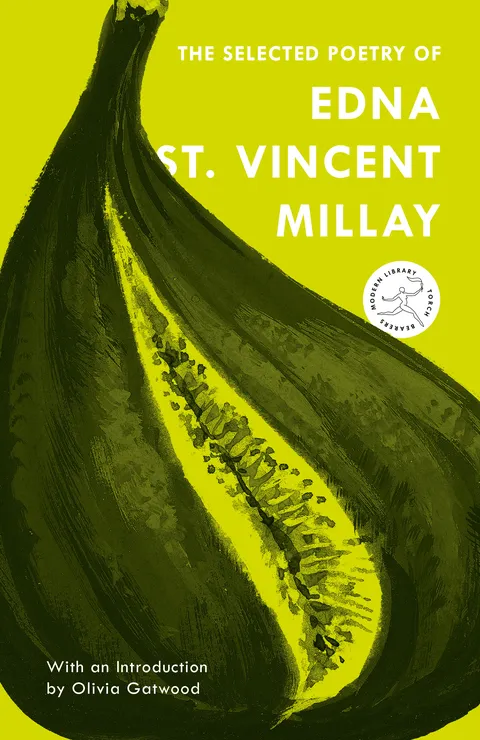
The Selected Poetry of Edna St. Vincent Millay
Report an issue
Tell us what's wrong and we'll take a look.
Thanks – we got it. We'll review and follow up if needed.
An indispensable collection of the groundbreaking poet’s most masterful and innovative work, celebrating a bold early voice of female liberation, independence, and queer sexuality—featuring a new introduction by poet Olivia Gatwood, author of Life of the Party
Edna St. Vincent Millay defined a generation as one of the most critically acclaimed poets of the Modernist era. Her work pushed boundaries within the literary canon for its lyrical expression of female embodiment and progressive feminist politics, and she was honored as only the third woman to be awarded the Pulitzer Prize for Poetry.
The Selected Poetry of Edna St. Vincent Millay demonstrates Millay’s legacy and influence on contemporary poetry. Sometimes satirical, often sharp, and always striking, the poems in this collection span Millay’s remarkable career, from the success of Renascence and Other Poems to the sting of A Few Figs from Thistles, and Second April, as well as “The Ballad of the Harp-Weaver” and eight sonnets from the early twenties. Millay’s incandescent poetry continues to inspire today as broadly and deeply as during her lifetime.
The Modern Library Torchbearers series features women who wrote on their own terms, with boldness, creativity, and a spirit of resistance.
AMERICAN INDIAN STORIES • THE AWAKENING • THE CUSTOM OF THE COUNTRY • THE HEADS OF CERBERUS • LADY AUDLEY’S SECRET • LOVE, ANGER, MADNESS • PASSING • THE TRANSFORMATION OF PHILIP JETTAN • VILLETTE • THERE IS CONFUSION • THE SELECTED POEMS OF EDNA ST. VINCENT MILLAY
Edna St. Vincent Millay
Edna St. Vincent Millay was born in 1892 in Rockland, Maine, the eldest of three daughters, and was encouraged by her mother to develop her talents for music and poetry. Her long poem "Renascence" won critical attention in an anthology contest in 1912 and secured for her a patron who enabled her to go to Vassar College.
After graduating in 1917 she lived in Greenwich Village in New York for a few years, acting, writing satirical pieces for journals (usually under a pseudonym), and continuing to work at her poetry. She traveled in Europe throughout 1921-22 as a "foreign correspondent" for Vanity Fair. Her collection A Few Figs from Thistles (1920) gained her a reputation for hedonistic wit and cynicism, but her other collections (including the earlier Renascence and Other Poems [1917]) are without exception more seriously passionate or reflective.
In 1923 she married Eugene Boissevain and -- after further travel -- embarked on a series of reading tours which helped to consolidate her nationwide renown. From 1925 onwards she lived at Steepletop, a farmstead in Austerlitz, New York, where her husband protected her from all responsibilities except her creative work. Often involved in feminist or political causes (including the Sacco-Vanzetti case of 1927), she turned to writing anti-fascist propaganda poetry in 1940 and further damaged a reputation already in decline. In her last years of her life she became more withdrawn and isolated, and her health, which had never been robust, became increasingly poor.
She died in 1950.
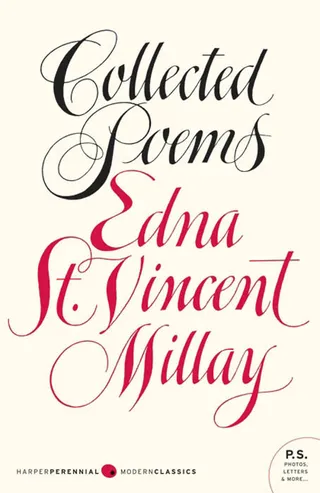
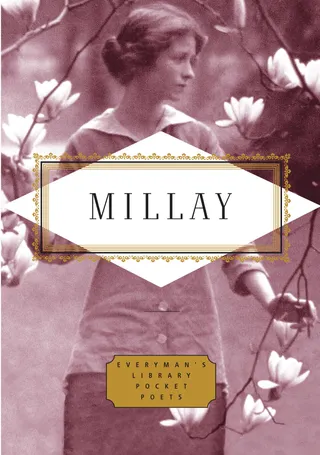
More by Edna St. Vincent Millay









Why Readwise Books?
Readwise Books is an ebook & audiobook platform that automatically logs how much you and your friends read, making it fun and easy to read more. Learn more →