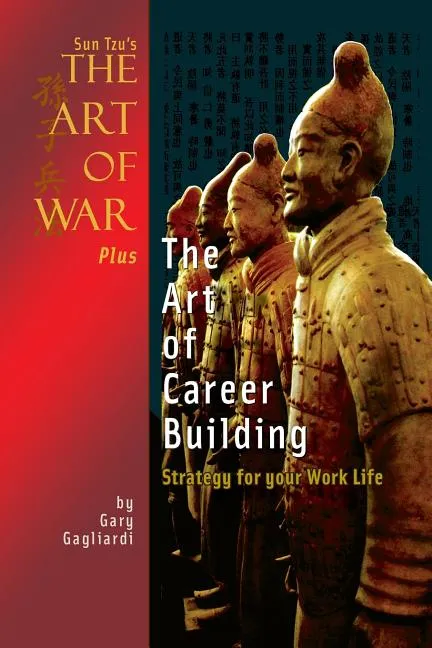
Sun Tzu's The Art of War Plus The Art of Career Building
Strategy for your Work Life
Report an issue
Tell us what's wrong and we'll take a look.
Thanks – we got it. We'll review and follow up if needed.
Two books in one: the complete Art of War in its only award-winning translation and a line-by-line adaption of Sun Tzu's text to advancing your career. If you want a powerful new perspective on how to advance your career, this is the book for you. This book applies Sun Tzu's methods specifically to the challenges of finding a better job, getting in-house promotions, dealing with office politics, combating internal rivals, navigating organizational conflicts, interpreting office rumors, and more. Its advice on career planning, company hierarchies, and changing jobs follows Sun Tzu's principles line by line. The complete text of The Art of War is on the left-hand pages, and The Art of Career Building is on the facing right-hand pages. 224 pages. New edition contains a new introductory explanations of Sun Tzu's concepts, a glossary, an index, and list in each chapter to related articles in Sun Tzu's Playbook. Contents: Art of War (numbered chapters) Art of Career Building (chapter below) Foreword: A Winning Career Introduction: Sun Tzu's Basic Concepts 1 Analysis Career Planning 2 Going to War Changing Jobs 3 Planning an Attack Picking the Right Job 4 Positioning Getting Promoted 5Momentum Career Momentum 6Weakness and Strength Organizational Politics 7Armed Conflict Internal Conflict 8Adaptability Flexibility in Your Career 9Armed March Your Job Search 10Field Position Evaluating Opportunities 11Types of Terrain Career Stages 12 Attacking with Fire Winning a Job 13Using Spies Using Contacts Glossary of Strategic Concepts Index of Topics in The Art of War About the Author
Sun Tzu
Sun Tzu, also known as Sun Wu or Sunzi, was an ancient Chinese military strategist believed to be the author of the acclaimed military text, The Art of War. Details about Sun Tzu’s background and life are uncertain, although he is believed to have lived c. 544-496 BCE. Through The Art of War, Sun Tzu’s theories and strategies have influenced military leaders and campaigns throughout time, including the samurai of ancient and early-modern Japan, and more recently Ho Chi Minh of the Viet Cong and American generals Norman Swarzkopf, Jr. and Colin Powell during the Persian Gulf War in the 1990s.
More by Sun Tzu










Why Readwise Books?
Readwise Books is an ebook & audiobook platform that automatically logs how much you and your friends read, making it fun and easy to read more. Learn more →