Report an issue
Tell us what's wrong and we'll take a look.
Thanks – we got it. We'll review and follow up if needed.
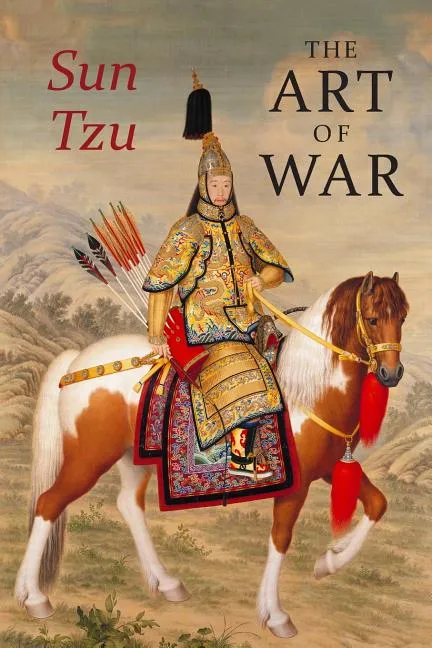
2018 Reprint of 1943 Edition. Full facsimile of the original edition, not reproduced with Optical Recognition software. Abridged by Major Thomas R. Phillips, from the classic translation by Lionel Giles. Preserved in China for more than 2,000 years before it was brought to the West by the French, this compact little book is widely regarded as the oldest military treatise in the world. Rumored to have been used by Napoleon in his campaigns to conquer Europe, it today retains much of its original merit. American officers read it closely during World War II. The Japanese army studied the work for decades, and many 20th-century Chinese officers are said to have known the book by heart. More recently, it has also been viewed as a valuable guide to competing successfully in business. Stressing the importance of attacking your enemy when he is unprepared and scheming to discover his plans, the author advises avoiding the strong and striking at the weak and using spies for every kind of business. Principles of strategy, tactics, maneuvering, and communications, the treatment of soldiers, the importance of strong troops and well-trained officers, and the administration of rewards and punishments all have a modern ring to them. A valuable guide to the conduct of war, this classic of military strategy is indispensable to military personnel, history enthusiasts, and anyone intrigued by competition and rivalry.
Sun Tzu
Sun Tzu, also known as Sun Wu or Sunzi, was an ancient Chinese military strategist believed to be the author of the acclaimed military text, The Art of War. Details about Sun Tzu’s background and life are uncertain, although he is believed to have lived c. 544-496 BCE. Through The Art of War, Sun Tzu’s theories and strategies have influenced military leaders and campaigns throughout time, including the samurai of ancient and early-modern Japan, and more recently Ho Chi Minh of the Viet Cong and American generals Norman Swarzkopf, Jr. and Colin Powell during the Persian Gulf War in the 1990s.
More by Sun Tzu




Lionel Giles
Translated by
Lionel Giles (1875–1958) was a British scholar and translator best known for his translations of The Art of War and The Analects of Confucius.


Why Readwise Books?
Readwise Books is an ebook & audiobook platform that automatically logs how much you and your friends read, making it fun and easy to read more. Learn more →