A Few Crusted Characters
Report an issue
Tell us what's wrong and we'll take a look.
Thanks – we got it. We'll review and follow up if needed.
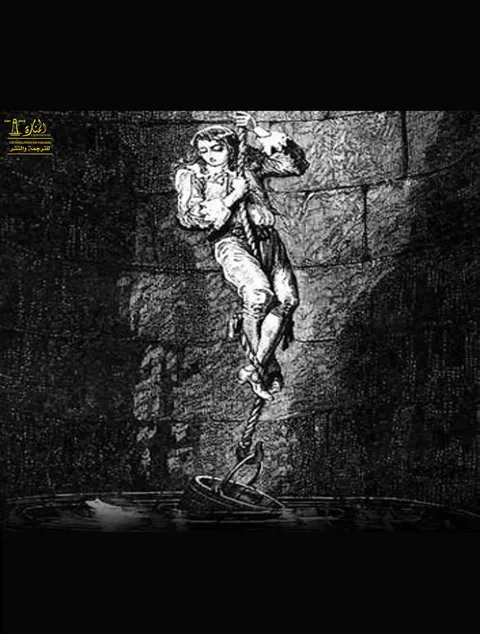
It is a Saturday afternoon of blue and yellow autumn time, and the scene is the High Street of a well-known market-town. A large carrier's van stands in the quadrangular fore-court of the White Hart Inn, upon the sides of its spacious tilt being painted, in weather-beaten letters: 'Burthen, Carrier to Longpuddle.'
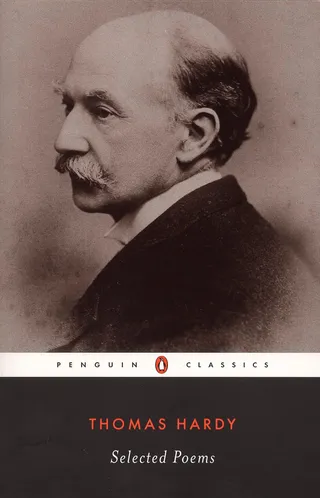
Thomas Hardy, (born June 2, 1840, Higher Bockhampton, Dorset, England—died January 11, 1928, Dorchester, Dorset), English novelist and poet who set much of his work in Wessex, his name for the counties of southwestern England.
Hardy was the eldest of the four children of Thomas Hardy, a stonemason and jobbing builder, and his wife, Jemima (née Hand). He grew up in an isolated cottage on the edge of open heathland. Though he was often ill as a child, his early experience of rural life, with its seasonal rhythms and oral culture, was fundamental to much of his later writing. He spent a year at the village school at age eight and then moved on to schools in Dorchester, the nearby county town, where he received a good grounding in mathematics and Latin. In 1856 he was apprenticed to John Hicks, a local architect, and in 1862, shortly before his 22nd birthday, he moved to London and became a draftsman in the busy office of Arthur Blomfield, a leading ecclesiastical architect. Driven back to Dorset by ill health in 1867, he worked for Hicks again and then for the Weymouth architect G.R. Crickmay.
Though architecture brought Hardy both social and economic advancement, it was only in the mid-1860s that lack of funds and declining religious faith forced him to abandon his early ambitions of a university education and eventual ordination as an Anglican priest. His habits of intensive private study were then redirected toward the reading of poetry and the systematic development of his own poetic skills. The verses he wrote in the 1860s would emerge in revised form in later volumes (e.g., “Neutral Tones,” “Retty’s Phases”), but when none of them achieved immediate publication, Hardy reluctantly turned to prose.
In 1867–68 he wrote the class-conscious novel The Poor Man and the Lady, which was sympathetically considered by three London publishers but never published. George Meredith, as a publisher’s reader, advised Hardy to write a more shapely and less opinionated novel. The result was the densely plotted Desperate Remedies (1871), which was influenced by the contemporary “sensation” fiction of Wilkie Collins. In his next novel, however, the brief and affectionately humorous idyll Under the Greenwood Tree (1872), Hardy found a voice much more distinctively his own. In this book he evoked, within the simplest of marriage plots, an episode of social change (the displacement of a group of church musicians) that was a direct reflection of events involving his own father shortly before Hardy’s own birth.
In March 1870 Hardy had been sent to make an architectural assessment of the lonely and dilapidated Church of St. Juliot in Cornwall. There—in romantic circumstances later poignantly recalled in prose and verse—he first met the rector’s vivacious sister-in-law, Emma Lavinia Gifford, who became his wife four years later. She actively encouraged and assisted him in his literary endeavours, and his next novel, A Pair of Blue Eyes (1873), drew heavily upon the circumstances of their courtship for its wild Cornish setting and its melodramatic story of a young woman (somewhat resembling Emma Gifford) and the two men, friends become rivals, who successively pursue, misunderstand, and fail her.
Thomas Hardy
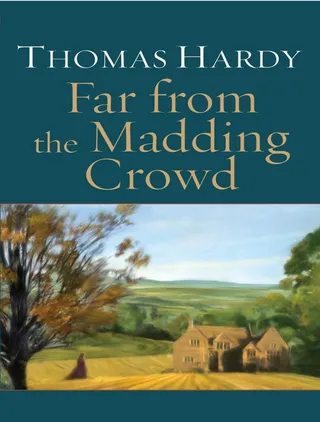
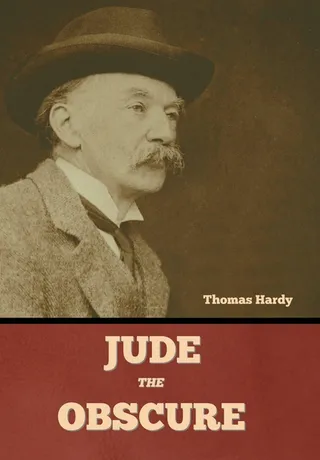
Thomas Hardy (1840-1938) was an English poet and novelist who initially trained and showed promise as an architect before finding success as a writer. His style and form followed in the Victorian realist tradition of George Eliot and the Romanticism of William Wordsworth. Hardy's work displays a concern that the conventions of Victorian society were damaging to many and places an emphasis on empathy toward those it made suffer. His richly drawn characters engage in a timeless striving for happiness and a chance to rise above a world that offers implacable barriers to their hopes. Although he regarded himself primarily as a poet, he first gained notoriety as the author of novels like Far from the Madding Crowd (1874), The Mayor of Casterbridge (1886), Tess of the d'Ubervilles (1891), and Jude the Obscure (1895). His poetry was acclaimed by some younger poets during his lifetime and lauded posthumously by greats like Ezra Pound and Philip Larkin.
More by Thomas Hardy





Why Readwise Books?
Readwise Books is an ebook & audiobook platform that automatically logs how much you and your friends read, making it fun and easy to read more. Learn more →