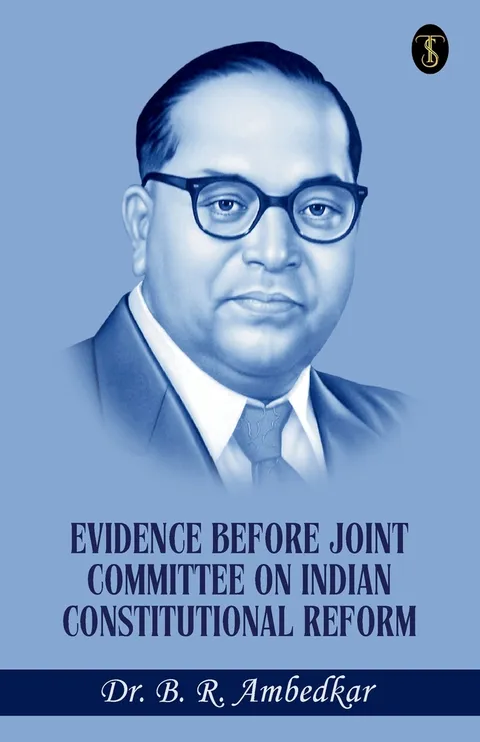
Evidence Before Joint Committee On Indian Constitutional Reform
Report an issue
Tell us what's wrong and we'll take a look.
Thanks – we got it. We'll review and follow up if needed.
The Evidence Before Joint Committee on Indian Constitutional Reform refers to the comprehensive collection of testimonies, documents, and arguments presented to the committee tasked with drafting India's constitution. Established in 1947, the committee, chaired by B. R. Ambedkar, solicited input from various stakeholders representing diverse interests and perspectives across the nation. This evidence encompassed submissions from political leaders, legal experts, social reformers, and representatives of marginalized communities, reflecting the multiplicity of voices shaping the constitutional framework. Deliberations covered critical issues such as federalism, fundamental rights, minority protections, and the structure of government. The evidence gathering process facilitated democratic dialogue and consensus-building, laying the groundwork for the eventual adoption of the Indian Constitution in 1950. It remains a testament to the inclusive and participatory approach undertaken to craft a foundational document that reflects the aspirations and values of the Indian populace.
B R Ambedkar
Bhimrao Ramji Ambedkar was born in 1891 into an "Untouchable" family of modest means. One of India's most radical thinkers, he transformed the social and political landscape in the struggle against British colonialism. He was a prolific writer who oversaw the drafting of the Indian Constitution and served as India's first Law Minister. In 1935, he publicly declared that though he was born a Hindu, he would not die as one. Ambedkar eventually embraced Buddhism, a few months before his death in 1956.
More by B R Ambedkar



Why Readwise Books?
Readwise Books is an ebook & audiobook platform that automatically logs how much you and your friends read, making it fun and easy to read more. Learn more →