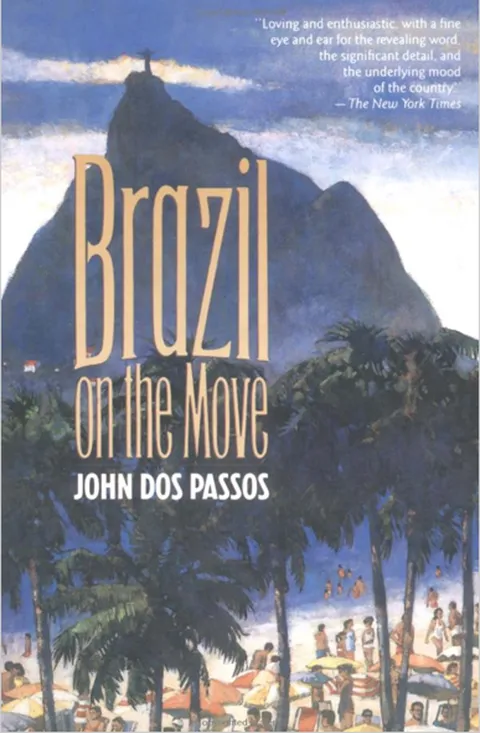
Brazil on the Move
Report an issue
Tell us what's wrong and we'll take a look.
Thanks – we got it. We'll review and follow up if needed.
John Dos Passos, the distinguished American novelist and historian has been personally interested in Brazil for the last fifteen years. He first visited the country in 1948, and returned again in 1956 and 1962. This book, which is based on his experiences in Brazil, presents the people and landscapes of a young country on the move.
Here you will find several extraordinary reports on Brasilia, first in the planning stage, second in the wildly frantic period when it was a half-finished group of buildings, and, finally, as it appeared to Mr. Dos Passos in the summer of 1962 when it was at last beginning to function as a city. Here, too, is the story of Brazil’s great road building program designed to unify the country, and of the political battles in this enormous country which totters on the verge of a Communist takeover.
From traveling the length and breadth of the land and from interviewing all kinds of people: politicians like Carlos Lacerda and religious leaders like Bishop Sales, Mr. Dos Passos has been able to transmit some of the flavor of the most important of Latin American nations.
Mr. Dos Passos himself is of Portuguese descent, and he speaks Portuguese as well as Spanish. He begins this readable and fascinating book with a much needed short sketch of the history of Brazil and how the Portuguese tradition differs from the Spanish in South America.
John Dos Passos
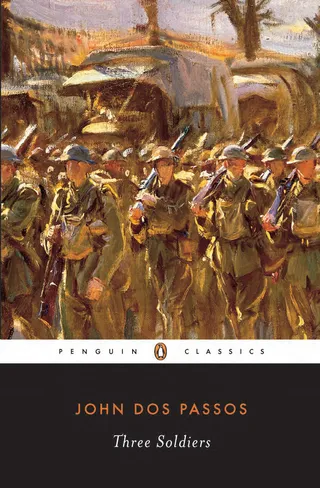
John Roderigo Dos Passos (b.1896, d.1970) was a writer, painter, and political activist. He wrote over forty books, including plays, poetry, novels, biographies, histories, and memoirs. He crafted over four hundred drawings, watercolors, and other artworks. Dos Passos considered himself foremost a writer of contemporary chronicles. He chose the moniker of “chronicler” because he was happiest working at the edge of fiction and nonfiction. Both genres benefited from his mastery of observation—his “camera eye”—and his sense of historical context. Dos Passos sought to ground fiction in historic detail and working-class, realistic dialogue. He invented a multimedia format of newsreels, songs, biographies, and autobiography to convey the frenzy of 20th century America’s industrialism and urbanism. His most memorable fiction—Three Soldiers (1920), Manhattan Transfer (1925), U.S.A. (1938)—possesses the authority of history and the allure of myth. Likewise, he sought to vitalize nonfiction history and reportage with the colors, sounds, and smells documented on his journeys across the globe.
More by John Dos Passos


















Why Readwise Books?
Readwise Books is an ebook & audiobook platform that automatically logs how much you and your friends read, making it fun and easy to read more. Learn more →