Report an issue
Tell us what's wrong and we'll take a look.
Thanks – we got it. We'll review and follow up if needed.
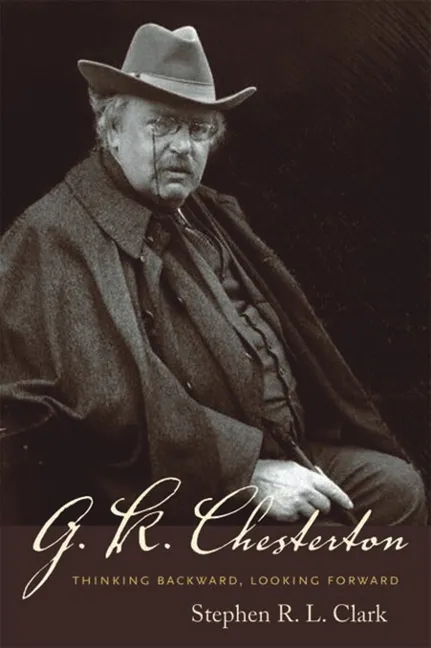
In this book, Stephen R. L. Clark, a philosopher with a lifelong "addiction" to science fiction, explores G. K. Chesterton's ideas and arguments in their historical context and evaluates them philosophically. He addresses Chesterton's sense that the way things are is not how they must have been or need be in the future and his willingness to face up to the apparent effects of the nihilism he detected in the science and politics of his day.
Clark offers a detailed study of some of Chesterton's works that have been identified by science fiction writers and critics as seminal influences. He attempts to deal with some of Chesterton's theories that have been found offensive or "positively wicked" by later writers and critics, including his arguments against female suffrage and in praise of war, his medievalist leanings, and his contemptuous rejection of the Darwinian evolutionary theory.
Stephen R L Clark
Stephen R.L. Clark is Emeritus Professor of Philosophy at the University of Liverpool, and Honorary Research Fellow in Theology and Religious Studies at the University of Bristol. His principal recent works include Plotinus: Myth, Metaphor and Philosophical Practice (University of Chicago, 2016); Cities and Thrones and Powers: Towards a Plotinian Politics (Angelico Press, 2022); and How the Worlds Became: Philosophy and the Oldest Stories (Angelico Press, 2023).
More by Stephen R L Clark


Why Readwise Books?
Readwise Books is an ebook & audiobook platform that automatically logs how much you and your friends read, making it fun and easy to read more. Learn more →