Report an issue
Tell us what's wrong and we'll take a look.
Thanks – we got it. We'll review and follow up if needed.
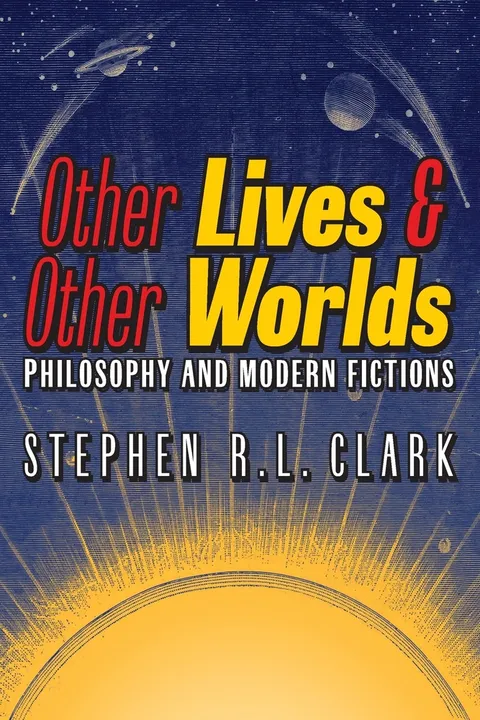
Stephen Clark's philosophical work has always been inspired by images and arguments drawn from science fiction, as well as by the long Platonic tradition of philosophy. In these papers (written between 1983 and 2023) on the writings of Kipling, Orwell, Lovecraft, Tolkien, and others, the recurring theme is an examination of the apparent conflict between the world as we are compelled to think it and our need for faith in the reality of humane values: on the one hand, the world revealed through scientific theory and exploration is immensely larger, older, stranger (and often grimmer) than either the world of our everyday dealings or that envisaged in the spiritual traditions; on the other, our knowledge of that strange world seems to depend on their being a real rational order of existence which is mirrored in our rational imaginings. What might this conundrum say about the possibilities of "life after death," an "objective moral order," "alien life," the nature of consciousness, and whatever "new civilization" may emerge as our present civilizations decay? That is the core of this path-breaking work.
Stephen R L Clark
Stephen R.L. Clark is Emeritus Professor of Philosophy at the University of Liverpool, and Honorary Research Fellow in Theology and Religious Studies at the University of Bristol. His principal recent works include Plotinus: Myth, Metaphor and Philosophical Practice (University of Chicago, 2016); Cities and Thrones and Powers: Towards a Plotinian Politics (Angelico Press, 2022); and How the Worlds Became: Philosophy and the Oldest Stories (Angelico Press, 2023).
More by Stephen R L Clark


Why Readwise Books?
Readwise Books is an ebook & audiobook platform that automatically logs how much you and your friends read, making it fun and easy to read more. Learn more →