Yugoslavia
Report an issue
Tell us what's wrong and we'll take a look.
Thanks – we got it. We'll review and follow up if needed.
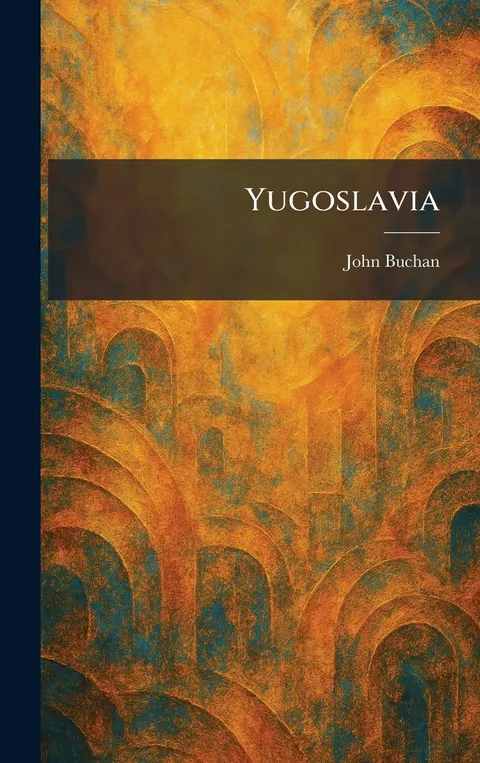
"Yugoslavia", edited by the noted historian and novelist John Buchan, provides an extensive and contemporary analysis of the newly formed South Slav state following the conclusion of the Great War. This work serves as a comprehensive guide to the historical, geographical, and political forces that shaped the emergence of the Kingdom of Serbs, Croats, and Slovenes. By examining the complex legacy of the Austro-Hungarian and Ottoman empires, the text explores the long-standing quest for national unity among the diverse peoples of the Balkan Peninsula.
The narrative details the diplomatic struggles, the impact of the Balkan Wars, and the tumultuous events of 1914-1918 that culminated in the creation of a unified Yugoslav state. Buchan and his contributors offer deep insights into the social structures, economic conditions, and cultural identities that defined the region during this pivotal era. Readers will find a meticulous accounting of the internal tensions and shared aspirations of a nation striving for stability in a reshaped Europe.
As a significant historical record, "Yugoslavia" captures the geopolitical complexities of the early twentieth century. It remains an essential resource for understanding the origins of modern Balkan history and the intricate ethnic and political dynamics of Southern Europe.
This work has been selected by scholars as being culturally important, and is part of the knowledge base of civilization as we know it. This work was reproduced from the original artifact, and remains as true to the original work as possible. Therefore, you may see the original copyright references, library stamps (as most of these works have been housed in our most important libraries around the world), and other notations in the work.
This work is in the public domain in the United States of America, and possibly other nations. Within the United States, you may freely copy and distribute this work, as no entity (individual or corporate) has a copyright on the body of the work.
As a reproduction of a historical artifact, this work may contain missing or blurred pages, poor pictures, errant marks, etc. Scholars believe, and we concur, that this work is important enough to be preserved, reproduced, and made generally available to the public. We appreciate your support of the preservation process, and thank you for being an important part of keeping this knowledge alive and relevant.
John Buchan
John Buchan (1875-1940) was a Scottish novelist, historian, and public servant who later served as Governor General of Canada. His books include The Thirty-Nine Steps, Greenmantle, and Prester John.The conditions of the writer's period are important to an understanding of the work. Questions about the individual and society, including the roles of education, work, belief, and public institutions, repeatedly enter the literature and intellectual debates of the era. The historical setting should not be confused with a modern retelling: the language and assumptions of these works belong to their original moment.Buchan was born in Scotland, studied at Glasgow and Oxford, and pursued a career combining public service, publishing, journalism, and literature. He wrote historical works and adventure fiction before creating Richard Hannay, whose first appearance came in The Thirty-Nine Steps. Written against the background of anxieties about espionage before the First World War, the novel helped establish the pace and structure of the modern pursuit thriller. Buchan later returned to Hannay in Greenmantle and other adventures. His historical interests were broader than espionage alone, extending to biographies and studies of major events. In later life he entered the peerage as Lord Tweedsmuir and served as Governor General of Canada. His novels are important to the genealogy of suspense fiction, though some assumptions about nationality, empire, and identity reflect the attitudes of their period. Film adaptations further strengthened the visibility of The Thirty-Nine Steps.For readers of The Thirty-Nine Steps, this biographical and publication context matters because the book addresses questions that were visible to its first audience but may be less familiar today. Understanding the author's working circumstances, intended genre, and intellectual environment can clarify the choices made in the text without treating its incidents as literal autobiography.In The Thirty-Nine Steps, the writer turns to espionage thriller to develop a particular subject. John Buchan's early spy adventure helped define the fugitive-on-the-run thriller. Its achievement is best understood in connection with the author's established body of writing and the literary conventions through which the subject is presented.Readers approaching this work today can appreciate its historical frame alongside its literary ambitions. Its treatment of character, perspective, society, or argument offers insight into the concerns that shaped its original audience. Where names, dates, or the original author's identity are uncertain, those details should be resolved through the edition and bibliographical record rather than supplied by conjecture.
More by John Buchan




Why Readwise Books?
Readwise Books is an ebook & audiobook platform that automatically logs how much you and your friends read, making it fun and easy to read more. Learn more →