
The Gap in the Curtain
Report an issue
Tell us what's wrong and we'll take a look.
Thanks – we got it. We'll review and follow up if needed.
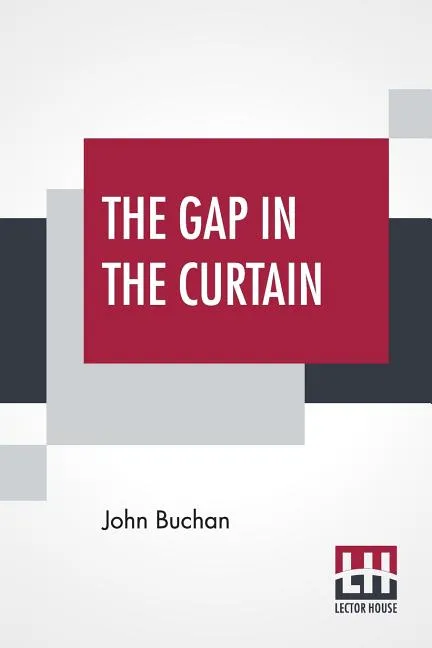
In an English country house, a strange experiment is about to take place: "A gem . . . unadulterated entertainment" (The New York Times). In this unique blend of suspense, satire, and science fiction, Sir Edward Leithen settles in for a holiday weekend at Lady Flambard's stately home in the Cotswolds. But the house party turns strange when one of the guests, the enigmatic physicist and mathematician Professor Moe, enlists the help of Leithen and his companions in a bizarre experiment meant to give them a glimpse of the future. For those who take part, the consequences will be dramatic—and test Leithen's formidable powers of reasoning—making for a "confident, assured" novel (The Spectator) from John Buchan, author of The Thirty-Nine Steps and a recipient of the James Tait Black Memorial Prize.
John Buchan
John Buchan (1875-1940) was a Scottish novelist, historian, and public servant who later served as Governor General of Canada. His books include The Thirty-Nine Steps, Greenmantle, and Prester John.The conditions of the writer's period are important to an understanding of the work. Questions about the individual and society, including the roles of education, work, belief, and public institutions, repeatedly enter the literature and intellectual debates of the era. The historical setting should not be confused with a modern retelling: the language and assumptions of these works belong to their original moment.Buchan was born in Scotland, studied at Glasgow and Oxford, and pursued a career combining public service, publishing, journalism, and literature. He wrote historical works and adventure fiction before creating Richard Hannay, whose first appearance came in The Thirty-Nine Steps. Written against the background of anxieties about espionage before the First World War, the novel helped establish the pace and structure of the modern pursuit thriller. Buchan later returned to Hannay in Greenmantle and other adventures. His historical interests were broader than espionage alone, extending to biographies and studies of major events. In later life he entered the peerage as Lord Tweedsmuir and served as Governor General of Canada. His novels are important to the genealogy of suspense fiction, though some assumptions about nationality, empire, and identity reflect the attitudes of their period. Film adaptations further strengthened the visibility of The Thirty-Nine Steps.For readers of The Thirty-Nine Steps, this biographical and publication context matters because the book addresses questions that were visible to its first audience but may be less familiar today. Understanding the author's working circumstances, intended genre, and intellectual environment can clarify the choices made in the text without treating its incidents as literal autobiography.In The Thirty-Nine Steps, the writer turns to espionage thriller to develop a particular subject. John Buchan's early spy adventure helped define the fugitive-on-the-run thriller. Its achievement is best understood in connection with the author's established body of writing and the literary conventions through which the subject is presented.Readers approaching this work today can appreciate its historical frame alongside its literary ambitions. Its treatment of character, perspective, society, or argument offers insight into the concerns that shaped its original audience. Where names, dates, or the original author's identity are uncertain, those details should be resolved through the edition and bibliographical record rather than supplied by conjecture.
More by John Buchan



Why Readwise Books?
Readwise Books is an ebook & audiobook platform that automatically logs how much you and your friends read, making it fun and easy to read more. Learn more →