Rhesus
Report an issue
Tell us what's wrong and we'll take a look.
Thanks – we got it. We'll review and follow up if needed.
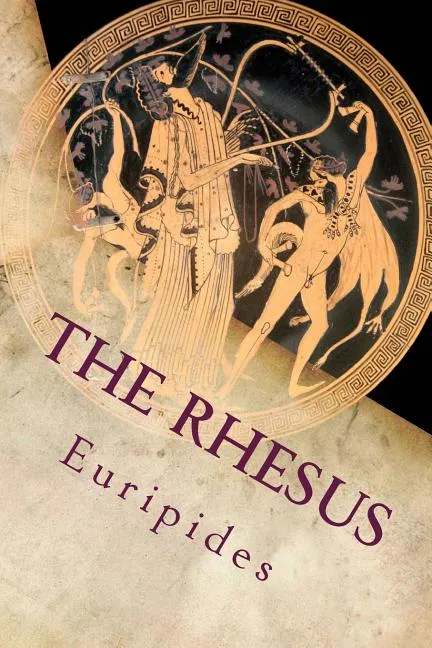
Though little is known for certain of his early life, Euripides was probably born around 460 b.c.e. to the farmer Mnesarchus and his wife Clito, and his studious nature quickly led him to a literary life in Athens. Euripides turned to playwriting at a young age, achieving his first victory in the dramatic competitions of the Athenian City Dionysia in 441 b.c.e. He would be awarded this honor three more times in his life, and once more posthumously. His plays are often ironic, pessimistic, and display radical rejection of classical decorum and rules. Together with Aeschylus and Sophocles, Euripides would provide the canon of Greek tragedy and thereby lay the foundation of Western theatre. "Rhesus" takes place during the Trojan War, and, as in book 10 of Homer's "Iliad", depicts the night when Odysseus and Diomedes sneak into the Trojan camp. There has been some debate as to the authorship of "Rhesus", but modern scholars believe Euripides to be the correct author.
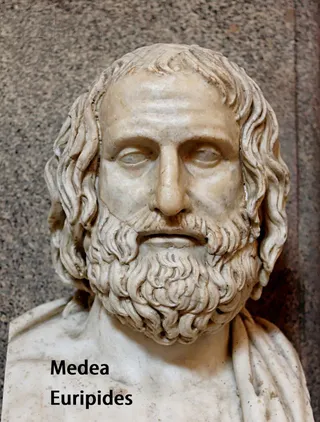
Euripides
Euripides was a tragedian of classical Athens. He was born on Salamis Island around 480 BC to his mother, Cleito, and father, Mnesarchus, a retailer who lived in a village near Athens. He had two disastrous marriages, and both his wives—Melite and Choerine (the latter bearing him three sons)—were unfaithful. He became a recluse, making a home for himself in a cave on Salamis. Along with Aeschylus and Sophocles, he is one of the three ancient Greek tragedians for whom any plays have survived in full. He became, in the Hellenistic Age, a cornerstone of ancient literary education. The details of his death are uncertain.
More by Euripides







Why Readwise Books?
Readwise Books is an ebook & audiobook platform that automatically logs how much you and your friends read, making it fun and easy to read more. Learn more →