Report an issue
Tell us what's wrong and we'll take a look.
Thanks – we got it. We'll review and follow up if needed.
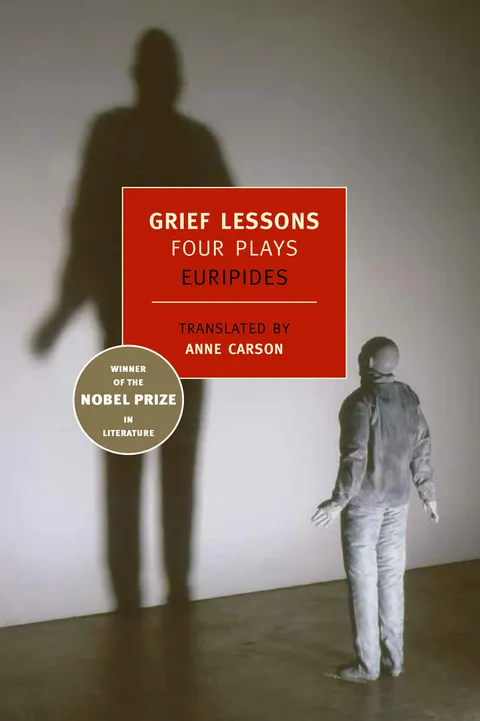
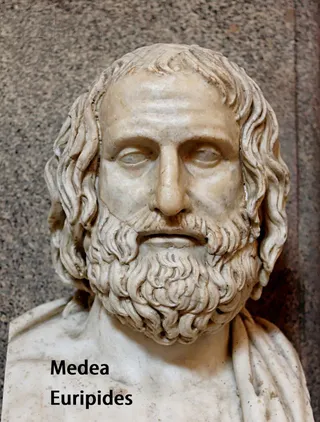
Euripides, the last of the three great tragedians of ancient Athens, reached the height of his renown during the disastrous Peloponnesian War, when democratic Athens was brought down by its own outsized ambitions. "Euripides," the classicist Bernard Knox has written, "was born never to live in peace with himself and to prevent the rest of mankind from doing so." His plays were shockers: he unmasked heroes, revealing them as foolish and savage, and he wrote about the powerless-women and children, slaves and barbarians-for whom tragedy was not so much exceptional as unending. Euripides' plays rarely won first prize in the great democratic competitions of ancient Athens, but their combustible mixture of realism and extremism fascinated audiences throughout the Greek world. In the last days of the Peloponnesian War, Athenian prisoners held captive in far-off Sicily were said to have won their freedom by reciting snatches of Euripides' latest tragedies.
Four of those tragedies are presented here in new translations by the contemporary poet and classicist Anne Carson. They are Herakles, in which the hero swaggers home to destroy his own family; Hekabe, set after the Trojan War, in which Hektor's widow takes vengeance on her Greek captors; Hippolytos, about love and the horror of love; and the strange tragic-comedy fable Alkestis, which tells of a husband who arranges for his wife to die in his place. The volume also contains brief introductions by Carson to each of the plays along with two remarkable framing essays: "Tragedy: A Curious Art Form" and "Why I Wrote Two Plays About Phaidra."
Euripides
Charles Martin is a poet, translator, and essayist. The author of seven books of poems and translator of Catullus and Ovid, he is the recipient of an Academy Award in Literature from the American Academy and Institute of Arts and Letters, a Bess Hokin Prize from Poetry magazine, and fellowships from the Ingram Merrill Foundation and the National Endowment for the Arts.
A.E. Stallings is an American poet and translator who lives in Athens, Greece. Her most recent books are LIKE: Poems and a translation of Hesiod’s Works and Days.
More by Euripides


Anne Carson
Translated by
Anne Carson was born in Canada and teaches ancient Greek for a living. Her awards and honors include the Lannan Award, the Pushcart Prize, the Griffin Trust Award for Excellence in Poetry, a Guggenheim fellowship, and the MacArthur "Genius" Award.


Why Readwise Books?
Readwise Books is an ebook & audiobook platform that automatically logs how much you and your friends read, making it fun and easy to read more. Learn more →