House and Home Papers
Report an issue
Tell us what's wrong and we'll take a look.
Thanks – we got it. We'll review and follow up if needed.
Explore the timeless wisdom of "House and Home Papers," a classic guide to household management and the cultivation of fulfilling family life. Penned by Christopher Crowfield and Harriet Beecher Stowe, this seventh edition offers insights into the art of domesticity and self-improvement. Delve into discussions surrounding love, romance, and navigating the complexities of family relationships, even within dysfunctional families.
More than just a manual, "House and Home Papers" provides motivational and inspirational advice applicable to daily life. Discover enduring principles for creating a harmonious home environment and fostering personal growth. This meticulously prepared print republication allows you to experience the charm and practical guidance that have resonated with readers for generations. A valuable resource for anyone interested in the history of home economics and the timeless pursuit of a well-managed and happy home.
This work has been selected by scholars as being culturally important, and is part of the knowledge base of civilization as we know it.
This work is in the public domain in the United States of America, and possibly other nations. Within the United States, you may freely copy and distribute this work, as no entity (individual or corporate) has a copyright on the body of the work.
Scholars believe, and we concur, that this work is important enough to be preserved, reproduced, and made generally available to the public. We appreciate your support of the preservation process, and thank you for being an important part of keeping this knowledge alive and relevant.
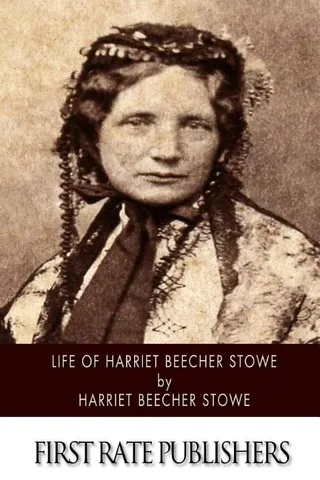
Harriet Beecher Stowe
Harriet Beecher Stowe was an American author and abolitionist. Born in Litchfield, Connecticut, she was raised in a deeply religious family and educated in a seminary school run by her elder sister. In her adult life, Stowe married biblical scholar and abolitionist Calvin Ellis Stowe, who would later go on to work as Harriet’s literary agent, and the two participated in the Underground Railroad by providing temporary refuge for escaped slaves travelling to the American North. Shortly before the outbreak of the American Civil War, Stowe published her most famous work, Uncle Tom’s Cabin, a stark and sympathetic depiction of the desperate lives of African American slaves. The book went on to see unprecedented sales, and informed American and European attitudes towards abolition. In the years leading up to her death, suffering from dementia or Alzheimer’s disease, Stowe is said to have begun re-writing Uncle Tom’s Cabin, almost word-for-word, believing that she was writing the original manuscript once again. Stowe died in July 1, 1896 at the age of eighty-five.
More by Harriet Beecher Stowe


Why Readwise Books?
Readwise Books is an ebook & audiobook platform that automatically logs how much you and your friends read, making it fun and easy to read more. Learn more →