
Report an issue
Tell us what's wrong and we'll take a look.
Thanks – we got it. We'll review and follow up if needed.
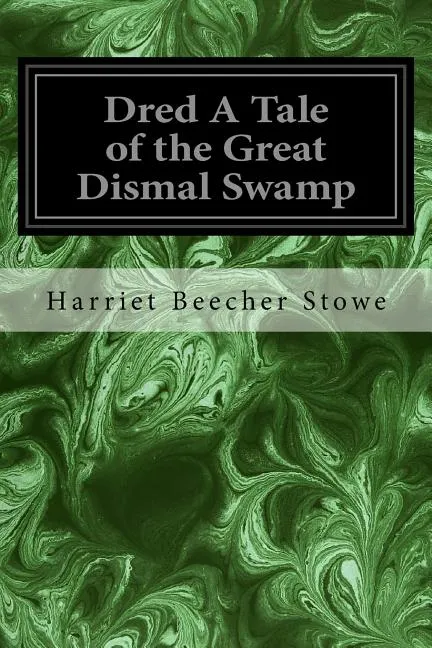

Harriet Beecher Stowe’s second antislavery novel was written partly in response to the criticisms of Uncle Tom’s Cabin (1852) by both white Southerners and black abolitionists. In Dred (1856), Stowe attempts to explore the issue of slavery from an African American perspective.
Through the compelling stories of Nina Gordon, the mistress of a slave plantation, and Dred, a black revolutionary, Stowe brings to life conflicting beliefs about race, the institution of slavery, and the possibilities of violent resistance. Probing the political and spiritual goals that fuel Dred’s rebellion, Stowe creates a figure far different from the acquiescent Christian martyr Uncle Tom.
In his introduction to the classic novel, Robert S. Levine outlines the antislavery debates in which Stowe had become deeply involved before and during her writing of Dred. Levine shows that in addition to its significance in literary history, the novel remains relevant to present-day discussions of cross-racial perspectives.
Harriet Beecher Stowe
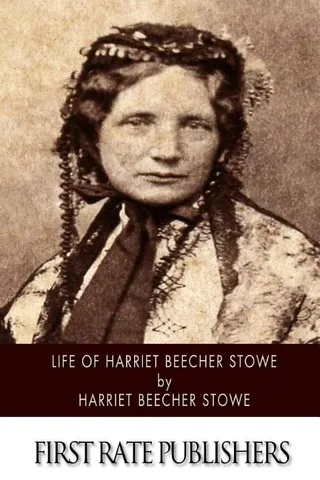
Harriet Beecher Stowe was an American author and abolitionist. Born in Litchfield, Connecticut, she was raised in a deeply religious family and educated in a seminary school run by her elder sister. In her adult life, Stowe married biblical scholar and abolitionist Calvin Ellis Stowe, who would later go on to work as Harriet’s literary agent, and the two participated in the Underground Railroad by providing temporary refuge for escaped slaves travelling to the American North. Shortly before the outbreak of the American Civil War, Stowe published her most famous work, Uncle Tom’s Cabin, a stark and sympathetic depiction of the desperate lives of African American slaves. The book went on to see unprecedented sales, and informed American and European attitudes towards abolition. In the years leading up to her death, suffering from dementia or Alzheimer’s disease, Stowe is said to have begun re-writing Uncle Tom’s Cabin, almost word-for-word, believing that she was writing the original manuscript once again. Stowe died in July 1, 1896 at the age of eighty-five.
More by Harriet Beecher Stowe






Why Readwise Books?
Readwise Books is an ebook & audiobook platform that automatically logs how much you and your friends read, making it fun and easy to read more. Learn more →