Report an issue
Tell us what's wrong and we'll take a look.
Thanks – we got it. We'll review and follow up if needed.
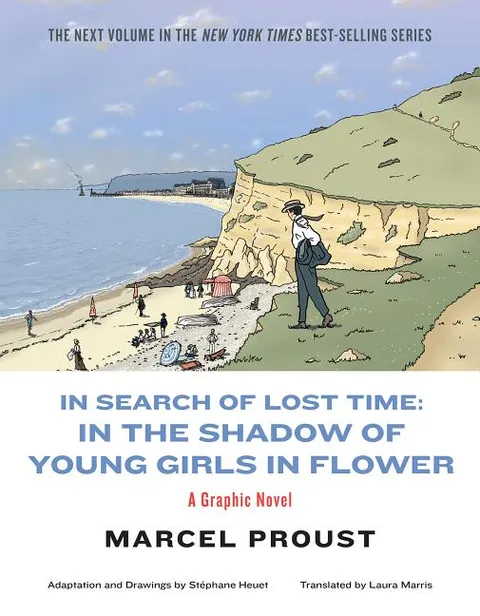
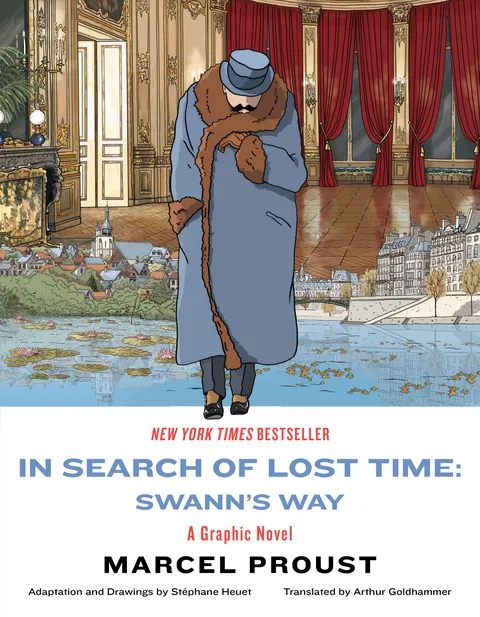
With its sweeping digressions into the past and reflections on the nature of memory, Proust’s oceanic novel In Search of Lost Time looms over twentieth-century literature as one of the greatest, yet most endlessly challenging, literary experiences. Influencing writers like Virginia Woolf and James Joyce, and even anticipating Albert Einstein in its philosophical explorations of space and time, In Search of Lost Time is a monumental achievement and reading it is a rite of passage for any serious lover of literature.
Now, in what renowned translator Arthur Goldhammer says might be “likened to a piano reduction of an orchestral score,” the French illustrator Stéphane Heuet re-presents Proust in graphic form for anyone who has always dreamed of reading him but was put off by the sheer magnitude of the undertaking. This New York Times best-selling graphic adaptation reveals the fundamental architecture of Proust’s work while displaying a remarkable fidelity to his language as well as the novel’s themes of time, art, and the elusiveness of memory. As Goldhammer writes in his introduction, “The reader new to Proust must attend closely, even in this compressed rendering, to the novel’s circling rhythms and abrupt cross-cuts between different places and times. But this necessary attentiveness is abetted and facilitated by the compactness of the graphic format.”
In this first volume, Swann’s Way, the narrator Marcel, an aspiring writer, recalls his childhood when—in a now-immortal moment in literature—the taste of a madeleine cake dipped in tea unleashes a torrent of memories about his family’s country home in the town of Combray. Here, Heuet and Goldhammer use Proust’s own famously rich and labyrinthine sentences and discerning observations to render Combray like never before. From the water lilies of the Vivonne to the steeple and stained glass of the town church, Proust’s language provides the blueprint for Heuet’s illustrations. Heuet and Goldhammer also capture Proust’s humor, wit, and sometimes scathing portrayals of Combray’s many memorable inhabitants, like the lovelorn Charles Swann and the object of his affection and torment, Odette de Crécy; Swann’s daughter, Gilberte; local aristocrat the Duchesse de Guermantes; the narrator’s uncle Adolphe; and the hypochondriac Aunt Léonie.
Including a Proust family tree, a glossary of terms, and a map of Paris, this graphic adaptation is a surprising and useful companion piece to Proust’s masterpiece for both the initiated and those seeking an introduction.
Marcel Proust
Marcel Proust transformed memory into art, revealing how time and experience shape the inner life. Born in 1871 in France, he lived much of his later life in relative isolation, devoted entirely to writing. A fascination with memory, perception, and the passage of time guided his philosophy and literary vision.Intricate reflection and psychological depth define the heart of his work. In works such as Swann's Way, In Search of Lost Time, he explored memory, identity, love, and the subtle impressions that shape human experience. Flowing, detailed prose reveals how small moments can hold profound emotional and philosophical meaning.Enduring influence has made him one of the most important figures in modern literature. Writers and thinkers have drawn inspiration from his exploration of time and consciousness. Today, his work remains widely read, valued for its depth, sensitivity, and lasting impact on narrative form.
More by Marcel Proust


Why Readwise Books?
Readwise Books is an ebook & audiobook platform that automatically logs how much you and your friends read, making it fun and easy to read more. Learn more →