
Heracles
Report an issue
Tell us what's wrong and we'll take a look.
Thanks – we got it. We'll review and follow up if needed.
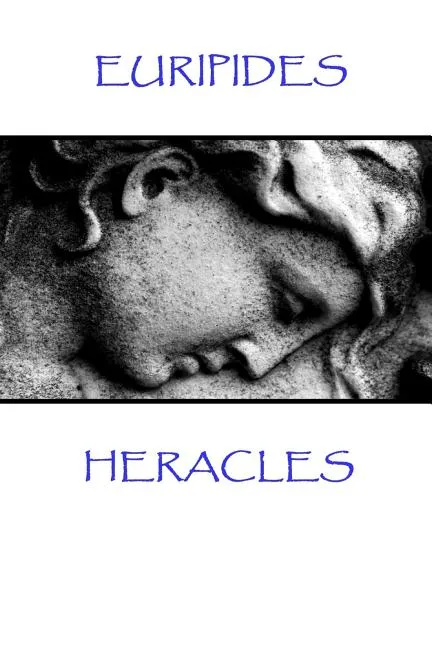

Euripides (480 BC-406 BC) is revered as one of the three great tragedians of classical Athens, along with Aeschylus and Sophocles, and produced the largest body of extant work by any ancient playwright. These three provided the canon of Greek tragedy and thereby lay the foundation of Western theatre. Euripides' works are characterized by their moral ambiguity, plots of intrigue, and a separate character (usually a deity) who introduces the play with an explanatory prologue. "Heracles" was first performed in 416 b.c.e. at the City Dionysia festival, and remains one of the playwright's most puzzling works. The somewhat disconnected halves of this story feature a powerful climax when Heracles undergoes a fit of madness in the underworld. It explores themes of courage, endurance and nobility, as Heracles comes to the realization that he must accept his flaws and face whatever life has in store for him.
Euripides
Euripides was a tragedian of classical Athens. He was born on Salamis Island around 480 BC to his mother, Cleito, and father, Mnesarchus, a retailer who lived in a village near Athens. He had two disastrous marriages, and both his wives—Melite and Choerine (the latter bearing him three sons)—were unfaithful. He became a recluse, making a home for himself in a cave on Salamis. Along with Aeschylus and Sophocles, he is one of the three ancient Greek tragedians for whom any plays have survived in full. He became, in the Hellenistic Age, a cornerstone of ancient literary education. The details of his death are uncertain.
More by Euripides







Why Readwise Books?
Readwise Books is an ebook & audiobook platform that automatically logs how much you and your friends read, making it fun and easy to read more. Learn more →