The Giaour - A Fragment of a Turkish Tale
Report an issue
Tell us what's wrong and we'll take a look.
Thanks – we got it. We'll review and follow up if needed.
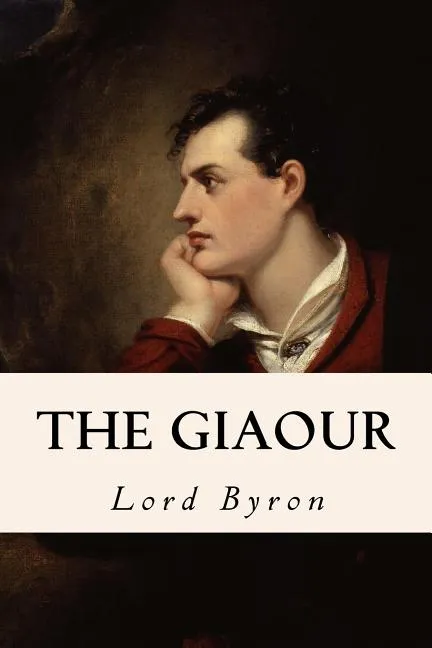
A woman drowned for loving the wrong man, a Turkish lord cut down in revenge, and a Christian stranger left to live with it: the first of Byron's Turkish tales.
George Gordon Byron (1788–1824) had not long come home from two years in Greece and the Levant, and The Giaour grew out of what he saw there. Leila is thrown into the sea in a sack for her unfaithfulness; Hassan, who ordered it, is killed by the giaour – an unbeliever, in Turkish – who then ends his days in a monastery, unable to repent and unable to forget. John Murray published it in 1813. It went through fourteen editions in two years and swelled from about seven hundred lines to more than thirteen hundred as Byron kept adding to it.
He built the poem as a fragment and handed it to three voices in turn – a Turkish fisherman, a monk, and the giaour himself – so that the same events reach us twice over from opposite sides of a religious divide. The lines move fast, in short irregular runs of rhyme that suit a story told in pieces. In one passage the fisherman curses the giaour to rise from his grave and prey on his own family, which makes this one of the earliest appearances of the vampire in English verse, six years ahead of Polidori's The Vampyre and out of the same circle.
Lord Byron
Lord Byron was an English poet and the most infamous of the English Romantics, glorified for his immoderate ways in both love and money. Benefitting from a privileged upbringing, Byron published the first two cantos of Childe Harold’s Pilgrimage upon his return from his Grand Tour in 1811, and the poem was received with such acclaim that he became the focus of a public mania. Following the dissolution of his short-lived marriage in 1816, Byron left England amid rumours of infidelity, sodomy, and incest.
In self-imposed exile in Italy Byron completed Childe Harold and Don Juan. He also took a great interest in Armenian culture, writing of the oppression of the Armenian people under Ottoman rule; and in 1823, he aided Greece in its quest for independence from Turkey by fitting out the Greek navy at his own expense.
Two centuries of references to, and depictions of Byron in literature, music, and film began even before his death in 1824.
More by Lord Byron









Why Readwise Books?
Readwise Books is an ebook & audiobook platform that automatically logs how much you and your friends read, making it fun and easy to read more. Learn more →